Search engine optimization (SEO) is important because it helps search engines discover and understand website content while helping people find relevant information, products, and services through organic search.
A website can contain valuable content, but if search engines cannot easily access, understand, or connect that content with relevant searches, its visibility can be limited. SEO helps address this gap by improving a website’s discoverability, relevance, and overall search presence.
Why Is SEO Important?
SEO matters because search is often a direct way for people to express what they need. When a website is properly optimized, its relevant pages have a better opportunity to be discovered when users search for related information.
The value of SEO can be understood through four connected stages:
Discoverability → Understanding → Search visibility → Relevant traffic
SEO does not guarantee that every page will rank or generate traffic. Instead, it helps create the conditions that allow useful content to be discovered and considered by search engines.
1. SEO Helps People Discover Your Website
Search engines need to discover and process website content before they can consider it for relevant search results. Google uses Googlebot to crawl websites and discover content for Google Search.
SEO therefore helps make important pages easier for search engines to access and understand.
This includes areas such as:
Clear page titles and headings
Accessible website content
Logical site structure
Crawlable links
Descriptive internal links
Relevant and useful page content
These practices do not guarantee rankings, but they can make a website’s content easier for search engines to process.
2. SEO Connects Content With Search Intent
People search because they have a question, problem, need, or goal. SEO helps website owners understand what users are looking for and create content that addresses that intent.
For example, these searches represent different needs:
“how to improve website speed” — informational intent
“website speed optimization service” — commercial intent
“website speed test” — tool-oriented intent
A useful SEO strategy considers these differences instead of treating every keyword as an opportunity to publish the same type of content.
This is why SEO is not simply about adding keywords to a page. The content must provide information that is relevant to what the searcher is trying to accomplish.
3. SEO Can Attract Relevant Organic Traffic
When a page appears for searches closely related to its subject, it can attract visitors who are already looking for information, products, or services connected to that page.
This makes organic search valuable because the visitor’s query provides context about their current need.
For example, a person searching for “accounting software for small business” has already indicated an interest in a particular type of solution. A relevant page can address that need by explaining the available options, answering important questions, or helping the visitor take the next step.
SEO does not guarantee clicks, conversions, or revenue. Its role is to improve the opportunity for relevant users to discover a website through organic search.
4. SEO Helps Search Engines Understand Your Content
Search engines need to determine what a page is about and how its information relates to a user’s query.
Clear content organization helps communicate that information.
Descriptive titles, useful headings, relevant terminology, logical internal links, accessible content, and a clear site structure can all contribute to making a website easier to understand.
Google’s SEO documentation describes SEO as helping search engines understand content and helping users discover websites.
This makes SEO partly a communication process: the better a website communicates its purpose, content, and relationships between pages, the easier it can be for search systems and users to understand it.
5. SEO Supports a Better Website Experience
SEO and user experience are not identical, but they often overlap.
A useful website should make its content easy to access and use across devices. This includes considerations such as:
Mobile usability
Secure connections
Page performance
Core Web Vitals
Clear navigation
Readable content
Avoiding intrusive elements that interfere with the main content
Google’s current page-experience guidance recommends looking at the overall experience rather than focusing on a single metric. Core Web Vitals are among the signals used by Google’s ranking systems, but good scores do not guarantee top rankings.
The goal, therefore, should not be to optimize individual technical metrics simply for a ranking benefit. The broader objective is to provide a website that works well for users while remaining accessible and understandable to search engines.
6. SEO Can Support Sustainable Organic Visibility
SEO can continue contributing to organic search visibility after a page is published. Unlike paid advertising, where visibility generally depends on an active advertising campaign, organic search visibility comes from a website’s pages being discovered and selected for relevant search results.
However, SEO should not be treated as a permanent ranking system.
Search results can change as search systems, competitors, websites, content, and user behavior change. A page that performs well today may need improvement later.
For that reason, SEO is better understood as an ongoing process of maintaining and improving a website’s usefulness, accessibility, relevance, and search presence.
Why SEO Matters for Businesses
For businesses, SEO can provide a way to become visible when potential customers are actively searching for information or solutions related to what the business offers.
A service business, for example, may benefit from being discoverable when someone searches for a specific service in their area. An ecommerce website may want product pages to appear for relevant product searches. An information website may want its articles to answer questions people are already asking.
The underlying principle is the same:
SEO helps businesses make relevant pages discoverable to people who are already using search to find information or solutions.
SEO can therefore support different stages of the customer journey, from initial research to evaluating options and finding a specific product or service.
The exact approach depends on the website, audience, industry, and search intent. There is no single SEO strategy that applies equally to every business.
SEO Is More Than Keywords and Rankings
A common misconception is that SEO is primarily about repeating keywords or trying to reach the first position in Google.
In reality, SEO involves several connected areas, including:
Search intent — understanding what users want
Content relevance — addressing the subject accurately and usefully
Technical accessibility — helping search engines access important content
Site structure — organizing information logically
Internal linking — connecting related pages for users and search engines
Page experience — providing an accessible and usable website
Search visibility — making relevant pages eligible to appear for appropriate searches
Google’s Search Essentials similarly emphasizes technical requirements, spam policies, and key best practices for websites appearing in Google Search.
These areas work together. Improving one element does not automatically compensate for weaknesses elsewhere.
What SEO Cannot Guarantee
Understanding the limits of SEO is just as important as understanding its benefits.
SEO cannot legitimately guarantee:
A first-place ranking
A specific amount of organic traffic
A fixed number of leads or sales
Permanent search visibility
Immediate results
Search engines determine which pages appear for particular queries based on their ranking systems and many other factors.
SEO should therefore be viewed as a process for improving a website’s ability to be discovered, understood, and considered in organic search—not as a formula for controlling search results.
Frequently Asked Questions
Is SEO really important?
SEO is important for websites that want to be discovered through organic search. It helps improve how search engines access and understand content and helps connect relevant pages with people searching for related information.
Is SEO necessary for every website?
Not necessarily. A website may receive visitors through direct traffic, referrals, social media, advertising, email, or other channels. SEO becomes particularly relevant when organic search is an important way for the intended audience to discover the website.
Does SEO guarantee higher rankings?
No. Following SEO best practices does not guarantee a particular ranking position. SEO improves a website’s search readiness and can support visibility, but search engines determine which results appear for individual queries.
How long does SEO take to work?
There is no universal timeframe. Results can depend on the website’s existing condition, content, competition, search demand, technical accessibility, and how quickly search engines discover and process changes.
Is SEO better than paid advertising?
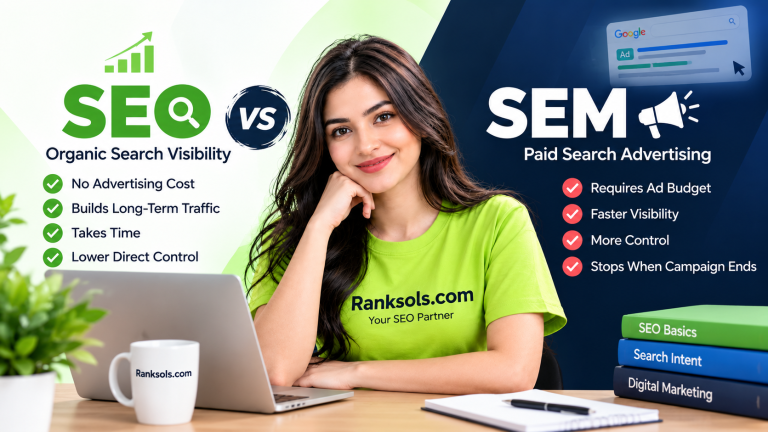
They serve different purposes. SEO focuses on organic search visibility, while paid search uses advertising placements. A business may use either approach or combine both depending on its goals, audience, and resources.
Key Takeaway
SEO is important because it helps connect useful website content with people who are searching for relevant information, products, and services.
Its value is not limited to rankings. SEO helps improve discoverability, search relevance, content understanding, organic visibility, and website accessibility. For businesses, this can create opportunities to reach people who are already expressing a need through search.
The strongest approach is to focus on making a website genuinely useful, accessible, understandable, and relevant rather than treating SEO as a way to manipulate rankings.