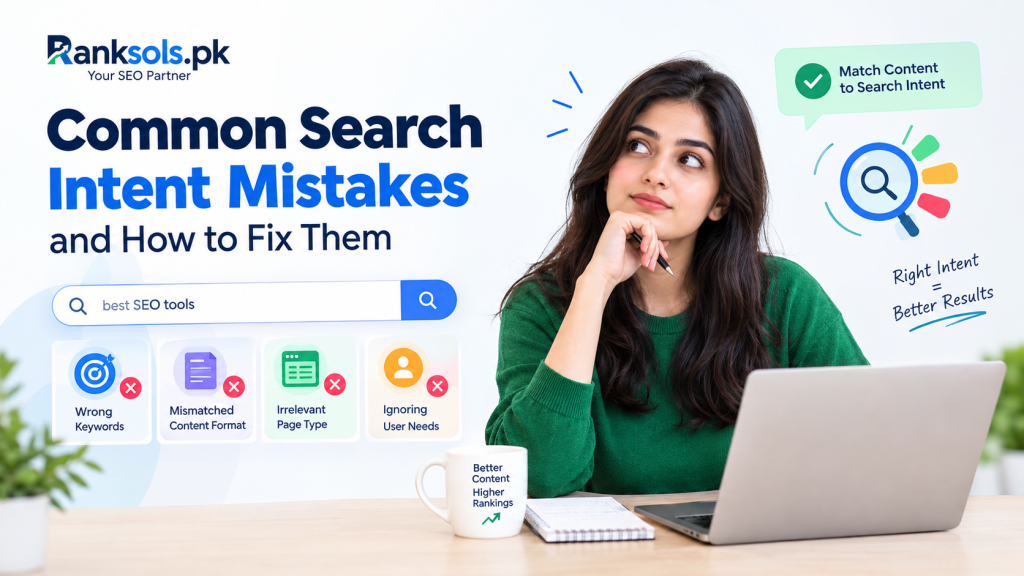
Search intent is the reason behind a user’s search query. Even when a webpage targets a relevant keyword, it may fail to meet user expectations if its content, format, or purpose does not match what searchers are looking for.
Understanding common search intent mistakes helps website owners, content writers, and SEO professionals create more relevant content, improve user experience, and attract visitors whose needs align with the page.
1. Targeting Keywords Without Understanding Search Intent
One of the most common SEO mistakes is choosing keywords based on search volume or difficulty without understanding the purpose behind them.
For example, someone searching for “what is web hosting“ likely wants an explanation, while a user searching for “best web hosting providers” is more likely to compare available options.
How to avoid it: Analyze the current search results before creating content. Examine the types of pages Google displays, such as educational guides, comparison articles, product pages, and service pages. Use these patterns alongside the query’s wording and context to identify the likely search intent.
2. Creating the Wrong Content Format
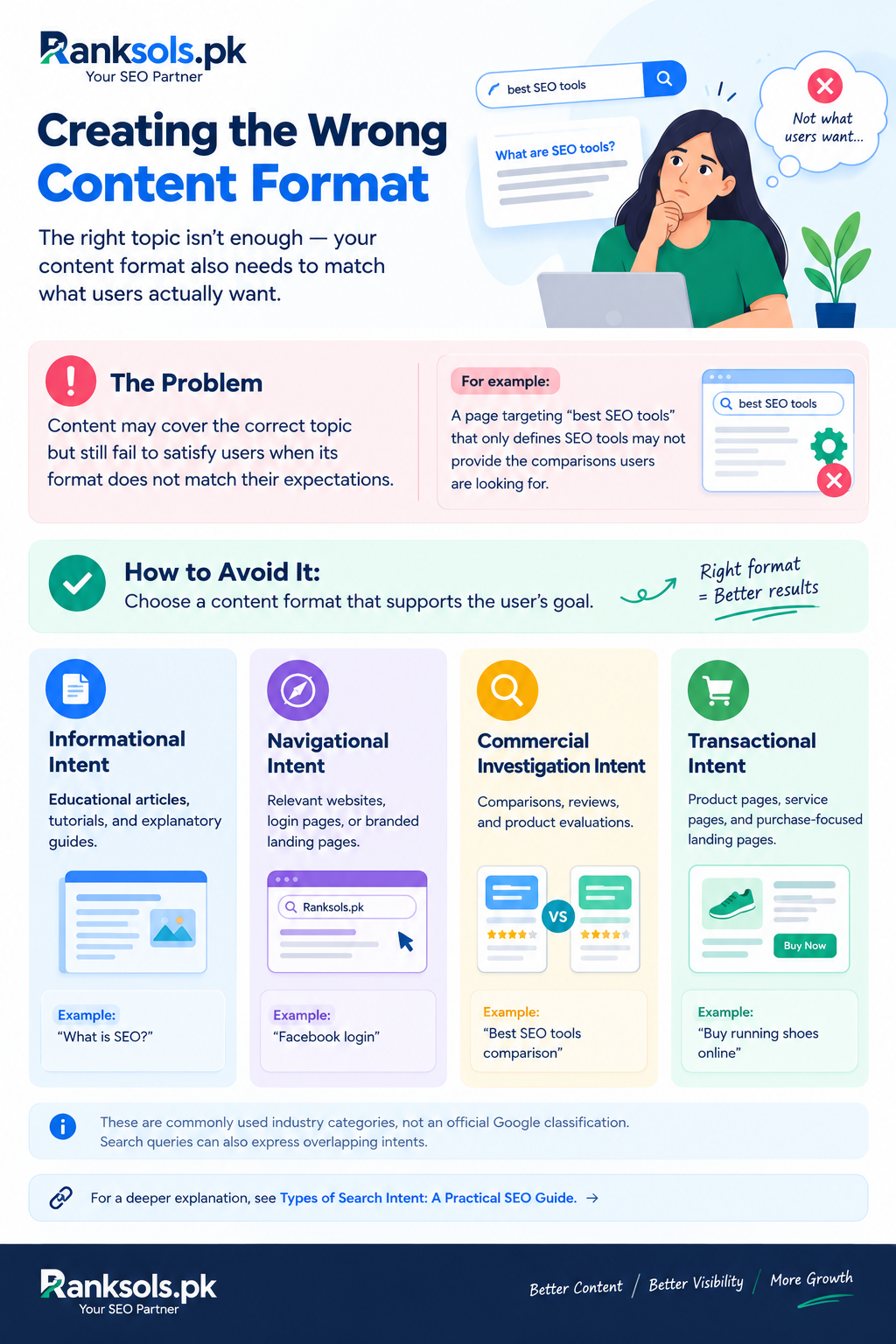
Content may cover the correct topic but still fail to satisfy users when its format does not match their expectations.
For example, a page targeting “best SEO tools” that only defines SEO tools may not provide the comparisons users are looking for.
How to avoid it: Choose a content format that supports the user’s goal.
Informational intent: Educational articles, tutorials, and explanatory guides.
Navigational intent: Relevant websites, login pages, or branded landing pages.
Commercial investigation intent: Comparisons, reviews, and product evaluations.
Transactional intent: Product pages, service pages, and purchase-focused landing pages.
These are commonly used industry categories, not an official Google classification. Search queries can also express overlapping intents.
For a deeper explanation, see Types of Search Intent: A Practical SEO Guide.
3. Mixing Search Intents Unnecessarily
A webpage can satisfy more than one search intent when the needs are closely related. The problem arises when unrelated information distracts from the page’s primary purpose.
For example, an introductory article about website speed may become less useful if it includes lengthy sections promoting hosting plans, comparing paid tools, and discussing unrelated services before explaining how to improve speed.
How to avoid it: Identify the primary user goal and structure the page around it. Include secondary information when it supports the main topic. If another user need requires substantial, separate coverage, consider creating a dedicated page and linking to it naturally.
4. Ignoring Changes in Search Results
Search results and user expectations can evolve over time. A keyword may begin displaying a different mix of guides, comparison pages, tools, or commercial results.
However, a change in rankings or search results does not automatically mean that search intent has changed. Competition, content quality, technical issues, and other factors can also influence visibility.
How to avoid it: Periodically review the search results for important keywords. Compare the dominant content formats with your existing page and determine whether the page still meets the likely needs of searchers. Update it when there is a clear reason to improve its relevance or usefulness.
5. Optimizing for Keywords Instead of User Needs
Repeating a target keyword throughout an article does not guarantee that the content answers the user’s question. Keyword-focused writing can become repetitive while leaving important questions unanswered.
For example, a guide targeting “how to improve website speed” should explain relevant optimization steps rather than repeatedly using the keyword without offering practical solutions.
How to avoid it: Answer the main question clearly, organize the content with descriptive headings, and use related terms naturally. Prioritize useful explanations and examples over keyword repetition.
6. Treating Similar Queries as Having Identical Intent
Keywords with similar wording can represent different goals. Treating them as interchangeable may lead to content that does not adequately satisfy the intended audience.
Consider these examples:
“How to improve website speed” — seeks instructions or solutions.
“Best website speed optimization tools” — suggests comparing tools.
“Hire a website speed optimization expert” — suggests looking for a professional service.
How to avoid it: Evaluate the meaning and purpose of each query instead of grouping keywords solely by wording. Group queries when they share a similar user goal, and consider separate pages when their intent and expected content differ substantially.
7. Misinterpreting Search Performance Data
Another common SEO mistake is assuming that low click-through rate, weak rankings, or limited engagement automatically indicates a search intent mismatch.
These metrics can help identify potential problems, but they do not explain the cause on their own. Search competition, title presentation, technical issues, content quality, and other factors may also affect performance.
How to avoid it: Use Google Search Console to examine queries, impressions, clicks, click-through rate (CTR), and average position. Check whether the queries reaching your page match its purpose. Use Google Analytics 4, where appropriate, to assess engagement and conversions after visitors arrive.
Treat the data as evidence for further investigation rather than proof of a single cause.
How to Audit a Page for Search Intent Mistakes
Use this simple process when planning new content or reviewing an existing page.
Identify the primary query: Determine the keyword and the user’s likely goal.
Review the search results: Examine the dominant page types and the information they provide.
Check your content format: Confirm that your page structure matches the user’s expectations.
Evaluate content relevance: Ensure the page answers the main question clearly and avoids distracting sections.
Review performance data: Look for relevant queries, visibility patterns, and possible engagement or conversion issues.
Choose the appropriate action: Improve the existing page, refine its focus, or create a separate resource if a different search intent deserves its own page.
For additional guidance, read Create Content That Matches Search Intent.
Conclusion
Common search intent mistakes occur when content is planned around keywords without sufficient attention to what users want to accomplish. Choosing the wrong format, combining unrelated goals, overlooking changes in search results, and misinterpreting performance data can all lead to missed opportunities.
The solution is to understand the user’s goal before creating or optimizing a page, then evaluate its relevance using search results and performance data.
If your website attracts impressions but struggles to reach the right audience, Ranksols can help you assess keyword targeting, content relevance, and search intent alignment as part of a broader SEO strategy.
To explore how search intent connects with organic performance, read How to Increase Organic Traffic.