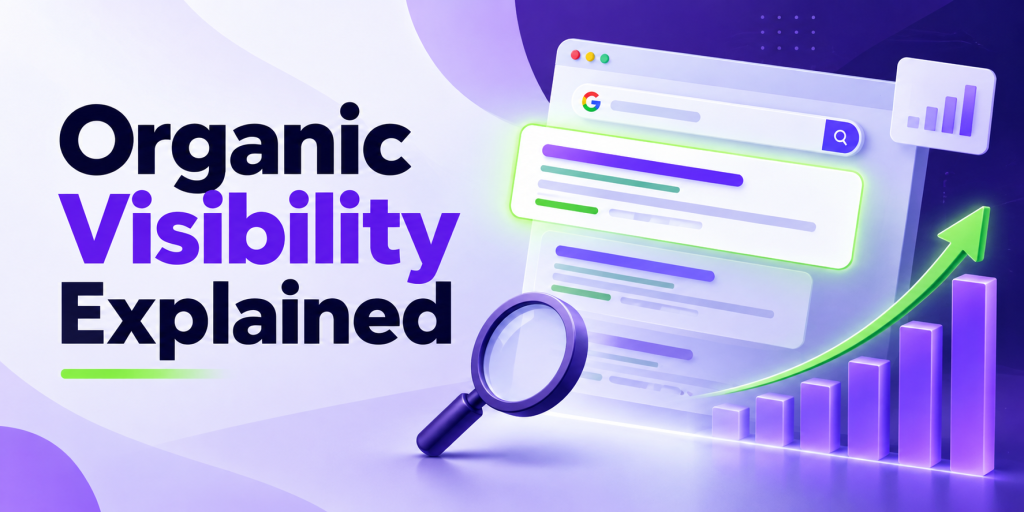
Organic visibility refers to how frequently and prominently a website appears in unpaid search results for relevant queries. It helps website owners understand their search presence, identify opportunities to improve rankings, and evaluate whether their pages are reaching the right audience.
For businesses, stronger organic search visibility can create more opportunities to attract relevant visitors. However, visibility does not automatically translate into clicks, leads, or sales. Understanding how to measure and interpret it is essential for making informed SEO decisions.
What Is Organic Visibility in SEO?
Organic visibility is the extent to which a website’s pages appear in unpaid search results for relevant search queries. It is influenced by factors such as keyword rankings, search demand, competing pages, and the search results displayed for a query.
For example, an SEO agency may appear in Google Search when users search for SEO services, technical SEO guidance, or local SEO advice. If its relevant pages appear for more suitable queries and gain stronger positions, its organic search presence may improve.
Organic visibility is not one standardized Google metric. SEO platforms may calculate visibility scores differently, using factors such as keyword positions, estimated search volume, and the importance of individual rankings. These scores are useful for tracking trends within the same tool, but they should not be treated as official Google measurements.
Why Is Organic Search Visibility Important?
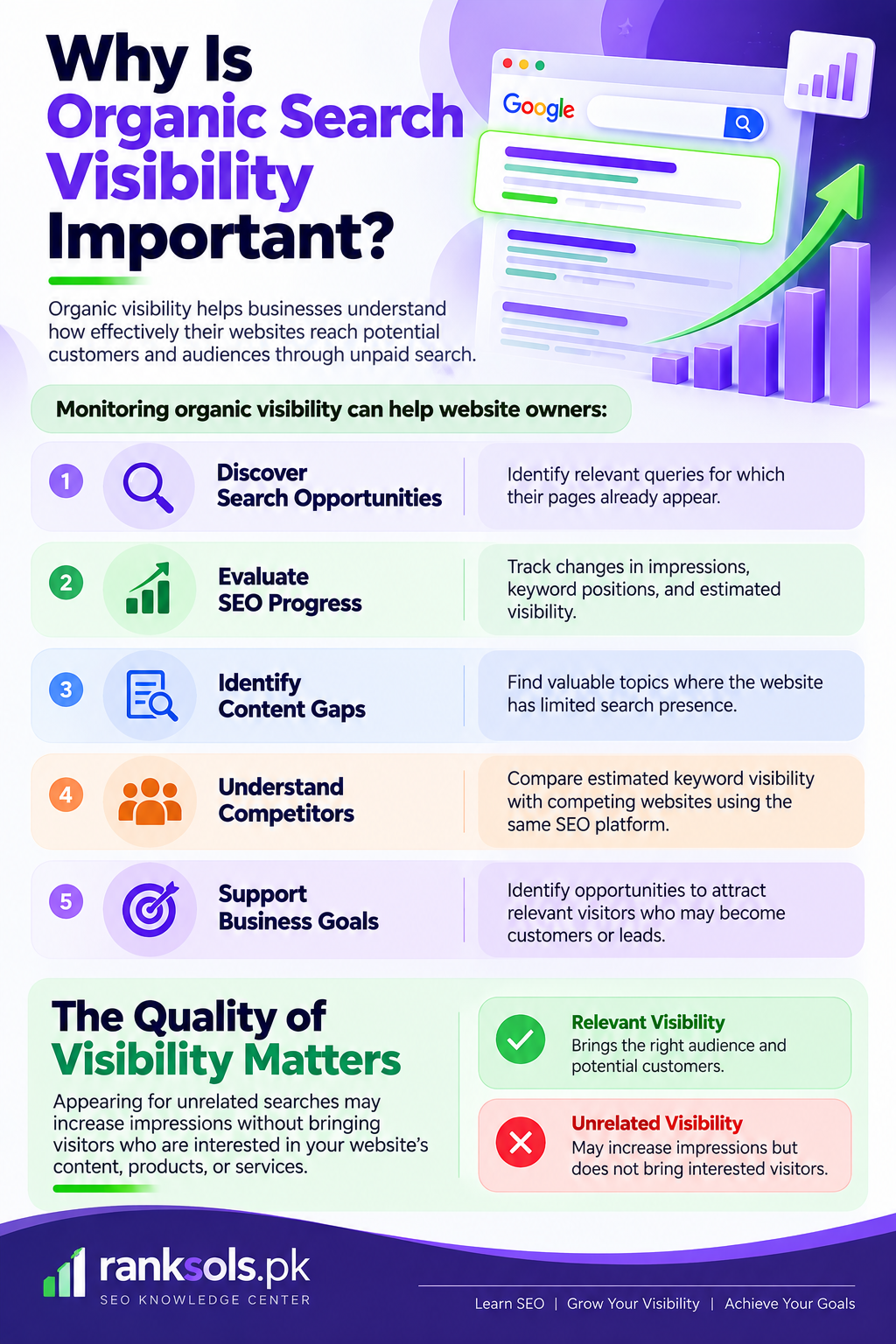
Organic visibility helps businesses understand how effectively their websites reach potential customers and audiences through unpaid search.
Monitoring it can help website owners:
Discover search opportunities: Identify relevant queries for which their pages already appear.
Evaluate SEO progress: Track changes in impressions, keyword positions, and estimated visibility.
Identify content gaps: Find valuable topics where the website has limited search presence.
Understand competitors: Compare estimated keyword visibility with competing websites using the same SEO platform.
Support business goals: Identify opportunities to attract relevant visitors who may become customers or leads.
The quality of visibility matters as much as its quantity. Appearing for unrelated searches may increase impressions without bringing visitors who are interested in the website’s content, products, or services.
How to Measure Organic Visibility
There is no single measurement that captures every aspect of organic visibility. Combining actual search performance data with keyword-ranking estimates provides a more useful picture of a website’s organic presence.
1. Use Google Search Console
Google Search Console is a primary source of data for understanding how a website performs in Google Search. Its Performance report provides four important metrics:
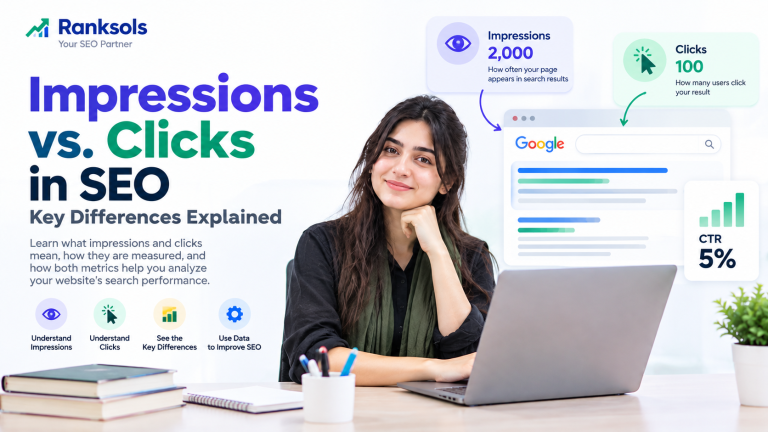
Impressions: How often a website’s search results were shown.
Average position: The average position of the highest-ranking result from your website in the applicable search results.
Clicks: The number of clicks from Google Search results to your website.
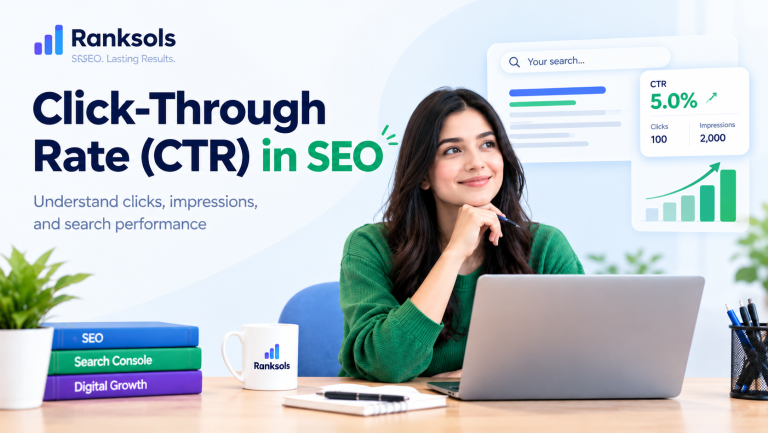
Click-through rate (CTR): The percentage of impressions that resulted in clicks.
Review these metrics by page and query to identify changes in search exposure and performance.
For example, if a page receives more impressions but its clicks remain unchanged, it may be appearing for additional queries or in positions that generate fewer clicks. Review the queries, average positions, and CTR before deciding what to improve.
2. Use Third-Party SEO Visibility Tools
SEO platforms offer visibility scores that estimate how prominently a website ranks for a selected set of keywords. These tools can help you:
Monitor estimated keyword visibility over time.
Compare your website with competitors.
Identify keywords where rankings may have room to improve.
Find relevant queries that could inform content improvements.
Keep in mind that the results depend on each tool’s keyword database, geographic settings, search volume estimates, and scoring method. A visibility score is an estimate, not a direct count of visitors or an official Google ranking metric.
What Factors Affect Organic Visibility?
Several factors can influence a website’s presence in organic search results. These factors work together, and no single change guarantees improved visibility.
Search Intent and Content Relevance
Content should address what users are trying to accomplish when they enter a query. A page that explains a concept serves a different purpose from a product page designed to support a purchase.
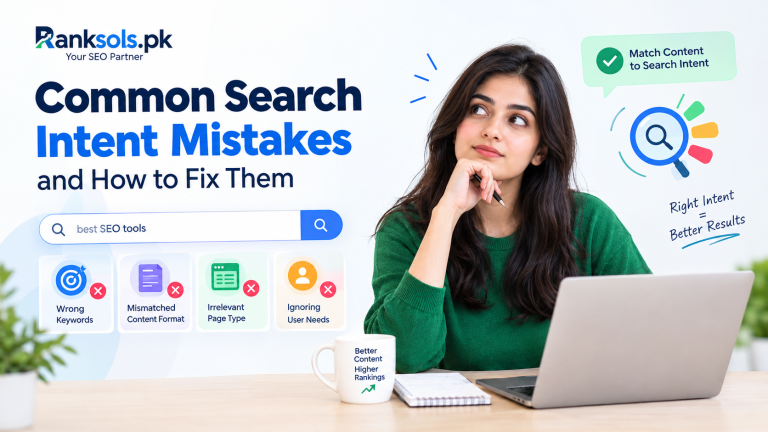
Understanding the different types of search intent helps website owners align their content with users’ expectations.
Content Quality and Topical Relevance
Useful, accurate, and well-structured content helps readers find the information they need. Pages should explain their subjects clearly, provide relevant details, and avoid unnecessary repetition.
Supporting articles can also help a website cover related questions more effectively when each article serves a distinct search intent.
Keyword Rankings and Search Demand
A page’s position influences its opportunity to appear prominently, while search demand affects how often users search for a query. Improvements in rankings for relevant queries may increase visibility, but the impact depends on competition and the search results shown.
Technical Accessibility and Indexing
Search engines need to discover, crawl, and process pages before they can appear in search results. Important pages may have limited visibility if they are blocked from crawling, excluded from indexing, or difficult to discover through the website’s internal links.
Check technical SEO issues when valuable pages receive little or no search exposure.
Competition and Search Result Features
Organic visibility can change as competing pages improve, new content appears, or search results change. Features such as local listings, images, videos, and other specialized results can also affect how traditional organic listings are displayed.
As a result, rankings and visibility may fluctuate even when a website has not changed its content.
How to Improve Organic Visibility
Improving organic visibility starts with identifying where a website has relevant search opportunities and addressing the issues that limit its performance.
1. Identify Pages with Growth Potential
Use Google Search Console to find pages receiving impressions for relevant queries but attracting relatively few clicks. Review their average positions, CTR, and query relevance to determine whether improvements are justified.
2. Improve Existing Content
Update outdated information, clarify important explanations, and address relevant questions that the page does not answer adequately. Ensure that the page title and headings accurately reflect its content and purpose.
Do not add keywords simply to increase their frequency. Prioritize useful improvements that help readers.
3. Strengthen Internal Linking
Link related pages using clear, descriptive anchor text. Good internal linking helps users navigate related information and helps search engines discover pages across your website.
For example, an article about organic visibility can link to a dedicated guide explaining how organic traffic is measured.
4. Resolve Technical SEO Problems
Check whether important pages can be crawled and indexed. Review indexing reports, canonical settings, internal links, and other technical issues when search exposure is unexpectedly limited.
5. Expand Relevant Topic Coverage
Publish supporting articles when they answer distinct questions that matter to your audience. Connect them to relevant pillar pages and related resources without creating multiple articles that compete for the same search intent.
6. Monitor Performance Consistently
Compare performance over suitable date ranges and examine changes in impressions, clicks, CTR, and average position. If visibility or traffic declines, investigate which pages and queries are affected before making major changes.
SEO improvements can take time to produce measurable results, and outcomes depend on competition, search behavior, and other factors.
Organic Visibility vs. Organic Traffic
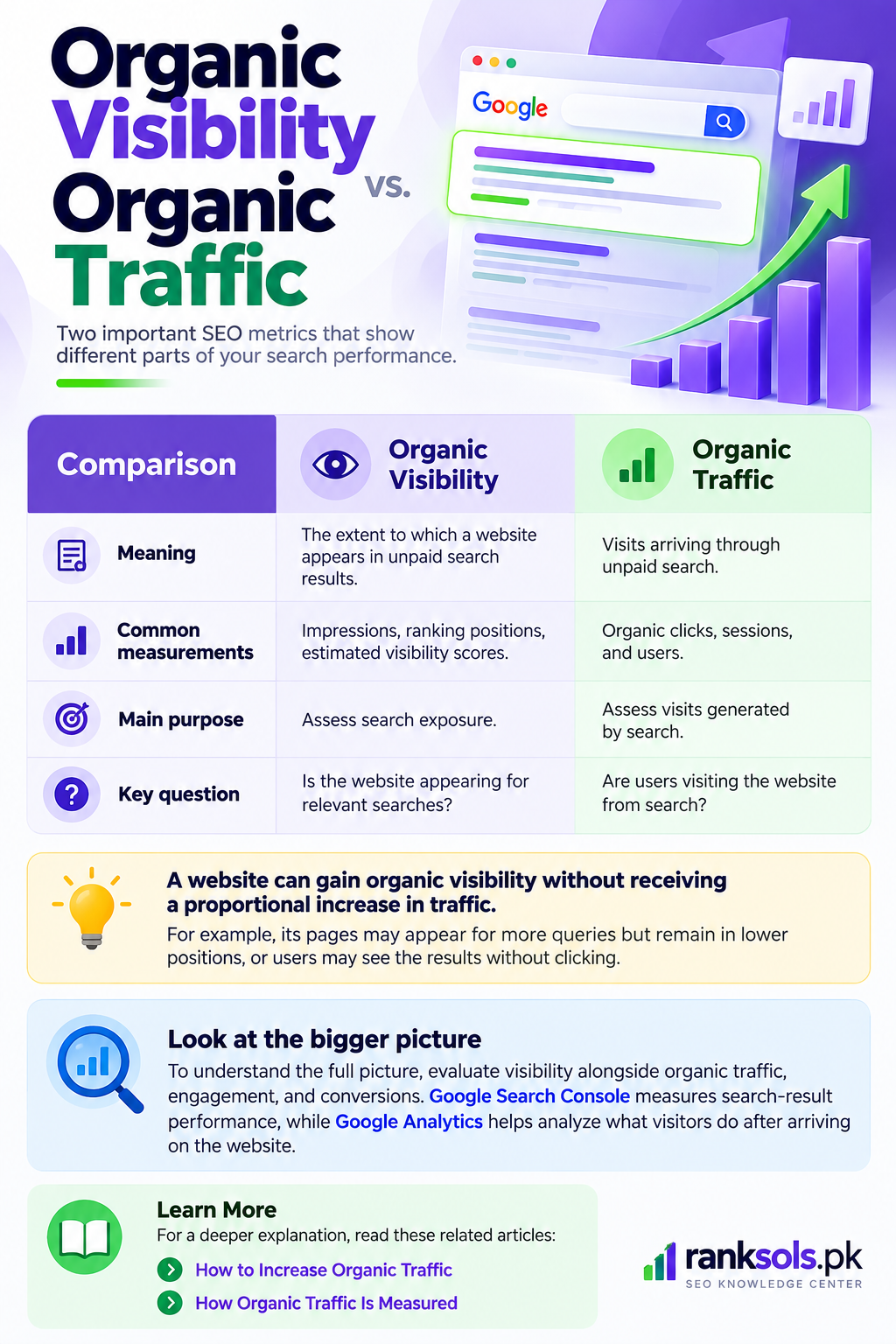
Organic visibility and organic traffic are closely related, but they describe different aspects of search performance.
| Comparison | Organic Visibility | Organic Traffic |
|---|---|---|
| Meaning | The extent to which a website appears in unpaid search results | Visits arriving through unpaid search |
| Common measurements | Impressions, ranking positions, estimated visibility scores | Organic clicks, sessions, and users |
| Main purpose | Assess search exposure | Assess visits generated by search |
| Key question | Is the website appearing for relevant searches? | Are users visiting the website from search? |
A website can gain organic visibility without receiving a proportional increase in traffic. For example, its pages may appear for more queries but remain in lower positions, or users may see the results without clicking.
To understand the full picture, evaluate visibility alongside organic traffic, engagement, and conversions. Google Search Console measures search-result performance, while Google Analytics helps analyze what visitors do after arriving on the website.
For a deeper explanation, read How to Increase Organic Traffic and How Organic Traffic Is Measured.
Frequently Asked Questions
Is organic visibility a Google ranking factor?
No. Organic visibility is a descriptive SEO concept or a metric calculated by third-party platforms, not a single official Google ranking factor. It describes how a website appears across organic search results.
How can I check my website’s organic visibility?
Start with Google Search Console to review impressions, clicks, CTR, and average position by page and query. You can also use third-party SEO tools to estimate keyword visibility and compare competitors.
Does higher organic visibility always mean more traffic?
No. Increased visibility can create more opportunities for clicks, but traffic also depends on ranking positions, search demand, query relevance, and how users interact with search results.
How long does it take to improve organic visibility?
There is no fixed timeline. Results depend on the website’s current condition, competition, the changes made, and how search engines process and evaluate pages. Monitor performance over time rather than relying on a guaranteed timeframe.
Final Thoughts
Organic visibility helps website owners understand how their pages appear across unpaid search results and where relevant opportunities exist. By analyzing search performance, improving useful content, strengthening internal links, and resolving technical barriers, businesses can make more informed SEO decisions.
If you need help identifying opportunities to improve your website’s organic search presence, Ranksols.pk offers an opportunity to explore SEO guidance and services suited to your business needs.