Increasing organic traffic requires more than publishing new content or targeting additional keywords. It involves improving search visibility, creating useful content, optimizing existing pages, and helping search engines discover and understand your website. A consistent, data-driven approach can help attract more relevant visitors from unpaid search results over time.
1. Create Content That Matches Search Intent
Search intent is the reason behind a user’s query. Content that addresses the user’s actual needs has a better chance of attracting relevant visitors from organic search.
Before creating or updating a page, identify what users expect to find.
Informational intent: Educational articles, tutorials, and explanatory guides.
Navigational intent: Relevant website destinations or branded landing pages.
Commercial investigation: Comparisons, reviews, and evaluation guides.
Transactional intent: Relevant product pages, service pages, and purchase options.
Choose a content format that satisfies the intended purpose instead of focusing only on keyword usage. A page that targets the right query but fails to meet the searcher’s expectations may struggle to attract meaningful engagement.
2. Improve Existing Content
Updating existing pages can be a practical way to improve organic search performance. Start by identifying pages that have declining clicks, receive impressions without attracting many visits, or no longer provide complete and accurate information.
Focus on improvements that address a clear weakness:
Update outdated information, examples, and recommendations.
Answer relevant questions that the page currently misses.
Improve headings, readability, and content organization.
Remove unnecessary repetition and irrelevant information.
Make explanations clearer and more useful to the intended audience.
For example, if a page receives impressions for relevant queries but provides only a brief explanation, improving its coverage may help it better satisfy users’ needs.
Do not update content merely to change its publication date or increase its word count. When an existing page already serves the topic well, improve it rather than automatically creating another article targeting the same search intent.
3. Optimize Titles and Search Snippets
A page’s title and search-result presentation help users decide whether to visit it. Write descriptive page titles that accurately communicate the page’s subject and purpose.
To improve search-result relevance:
Make the title clear, specific, and useful.
Include the primary topic naturally where appropriate.
Write a relevant meta description that summarizes the page’s value.
Avoid misleading promises, repetitive keywords, and exaggerated claims.
Google may generate a different title link or snippet depending on the page and search query. These optimizations can help users understand your content, but they do not guarantee a particular search-result presentation or higher rankings.
4. Strengthen Internal Linking
Internal links connect related pages on your website and help users discover additional information. They also help search engines find pages and understand relationships between content.
Improve your internal linking by:
Linking from relevant, established pages to important supporting articles.
Using descriptive anchor text that explains the destination.
Connecting supporting articles with their relevant main topics.
Ensuring important pages are accessible through crawlable links.
Avoiding links that provide no meaningful value to readers.
For example, an article about increasing organic traffic can link to a related resource explaining how organic traffic is measured.
A well-organized internal linking structure helps readers continue learning while making important content easier to discover. However, internal links alone do not guarantee that a page will be indexed or rank higher.
5. Resolve Technical Barriers to Organic Visibility
Search engines need to access and process your pages before they can appear in search results. Technical problems can limit organic visibility even when the content is useful.
Review these areas:
Crawling: Ensure search engines can discover and access important URLs.
Indexability: Check for unintended
noindexdirectives or blocking rules that prevent important pages from being indexed.Mobile usability and page experience: Make pages usable across devices and avoid disruptive elements.
Loading performance: Investigate slow pages and improve performance where practical.
Canonical URLs: Use appropriate canonical signals to indicate the preferred URL for duplicate or substantially similar pages.
XML sitemaps: Include important, indexable URLs that you want search engines to discover.
A sitemap can support URL discovery, but it does not guarantee crawling, indexing, or rankings. Similarly, an accessible and indexable page is not guaranteed to appear in search results.
The priority is to remove technical barriers affecting important content rather than make changes that have no clear benefit.
6. Target Relevant Search Queries
Keyword targeting helps align your pages with the language and needs of your intended audience. Instead of creating a separate article for every keyword variation, organize related queries around a clear topic and search intent.
Consider:
Relevant long-tail keywords.
Questions users ask about your subject.
Specific problems your audience wants to solve.
Related terms that naturally belong within the content.
Search queries already generating impressions for your website.
Use Google Search Console to identify queries for which your pages already appear. These queries can reveal opportunities to improve existing content or clarify whether a page is targeting the right audience.
Avoid creating multiple pages that serve essentially the same purpose. A focused content structure helps prevent keyword cannibalization and gives each article a clear role within your website’s SEO topic cluster.
7. Earn Relevant Backlinks Naturally
Backlinks are links from other websites to your pages. Relevant backlinks can help people discover your content and may contribute to search visibility.
Focus on publishing useful resources, original research, practical guides, or other material that relevant publishers have a genuine reason to reference. Promote these resources to appropriate audiences and build relationships within your industry.
Avoid buying links intended to manipulate rankings or participating in link schemes. The goal is to earn meaningful references rather than accumulate links without regard to relevance or quality.
Backlinks are only one part of SEO. They cannot compensate for content that fails to meet users’ needs or technical problems that prevent important pages from appearing in search results.
8. Measure Organic Traffic and Identify Opportunities
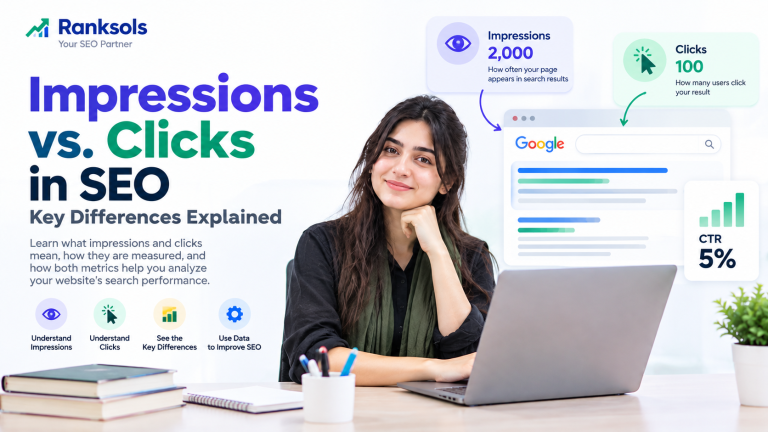
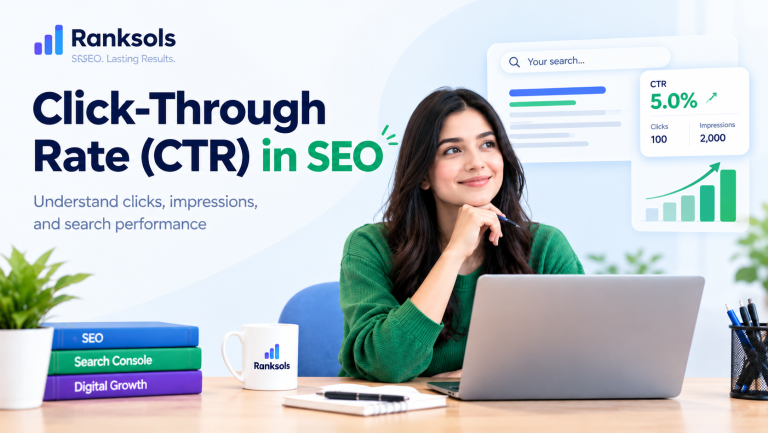
Use Google Search Console to understand how your pages perform in Google Search. Review these metrics:
| Metric | What it tells you |
|---|---|
| Impressions | How often your pages appear in Google Search results |
| Clicks | How many clicks your pages receive from Google Search |
| Click-through rate (CTR) | The proportion of impressions that generate clicks |
| Average position | The average position of your search results across recorded impressions |
Interpret these metrics together rather than treating any one of them as a complete measure of SEO success.
How to Identify Improvement Opportunities
High impressions but relatively few clicks: Review the queries, title, search-result presentation, and competing results.
Declining clicks: Compare equivalent time periods and investigate affected pages, queries, and possible seasonal changes.
Growing impressions but limited clicks: Check whether the additional visibility comes from relevant queries and whether the page satisfies their intent.
Organic visits without meaningful conversions: Use Google Analytics 4 to assess landing-page relevance, engagement, and conversion paths.
These patterns are diagnostic clues, not automatic explanations. For example, a low CTR may reflect the search query, result position, competition, or the type of results displayed.
A Practical Workflow
To prioritize improvements, follow this sequence:
Identify important pages and review their performance in Search Console.
Select pages with clear opportunities, such as relevant queries with growing impressions or sustained declines in clicks.
Check content relevance, internal links, and technical accessibility.
Make targeted changes that address the identified problems.
Monitor clicks, impressions, relevant organic visits, and conversions over an appropriate period.
Use comparable time periods and consider seasonality before drawing conclusions. SEO changes may take time to be reflected in search performance, and no particular outcome is guaranteed.
Common Mistakes to Avoid
When trying to increase organic traffic, avoid these common mistakes:
Publishing large amounts of repetitive or low-value content.
Stuffing keywords into headings and paragraphs.
Creating multiple pages that target the same search intent without a clear purpose.
Changing URLs without considering redirects and existing search visibility.
Treating sitemap submission or indexing eligibility as a guarantee of rankings.
Building irrelevant or manipulative backlinks.
Measuring success through rankings alone rather than clicks, relevant visits, and conversions.
Expecting immediate results or guaranteed traffic increases from SEO changes.
Organic traffic growth depends on several factors, including competition, content quality, technical accessibility, search demand, and changes in search results. A consistent process of investigation, improvement, and measurement is more useful than relying on shortcuts.
How Ranksols Can Help
Increasing organic traffic often requires coordinated improvements across content, on-page SEO, internal linking, and technical accessibility. Ranksols can help businesses assess their SEO needs and identify opportunities to improve organic search visibility through relevant SEO services.
A useful starting point is to understand your website’s current performance, identify the obstacles affecting important pages, and prioritize improvements that support your business objectives.
Final Thoughts
To increase organic traffic, focus on satisfying search intent, improving existing content, optimizing search-result presentation, strengthening internal links, resolving technical barriers, and measuring performance consistently.
Start with the pages and queries that offer the clearest opportunities for improvement. Prioritize changes that help users and make your website easier for search engines to understand, rather than relying on shortcuts or guaranteed-ranking promises.
For further guidance, explore related Ranksols resources on organic traffic measurement and other relevant SEO fundamentals.