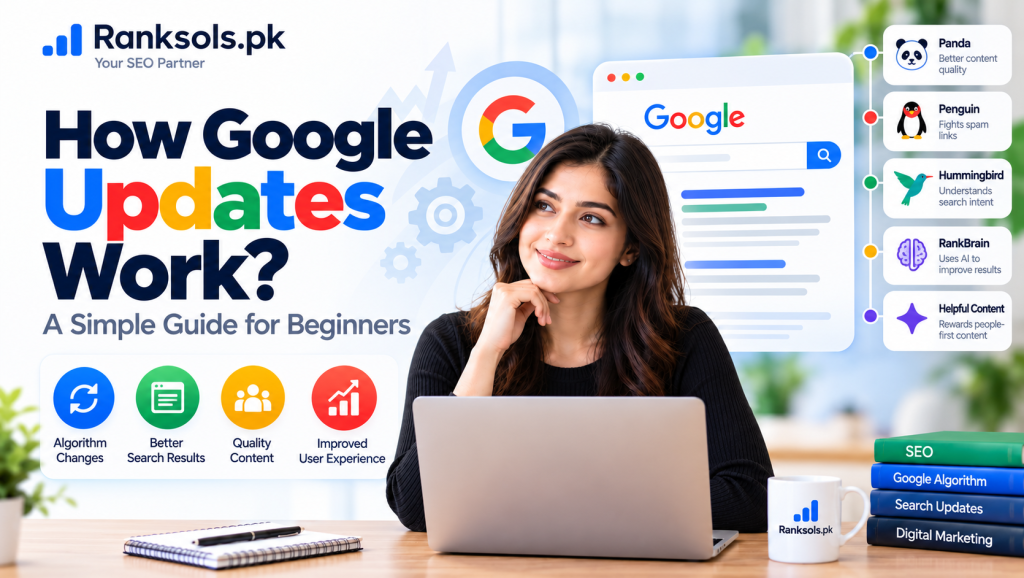
Google regularly updates its search algorithms and systems to improve the relevance and usefulness of search results. Some changes are broad core updates, while others focus on areas such as spam detection. Understanding how Google updates work helps website owners interpret ranking changes and make informed SEO decisions.
What Are Google Updates?
Google updates are changes to the algorithms and systems used to evaluate and rank content in search results. Google makes ongoing improvements throughout the year, including significant changes known as core updates and notable improvements to its spam-detection systems.
Not every update affects every website. A change in rankings following an update also does not automatically mean that a website has violated Google’s guidelines.
How Do Google Updates Work?
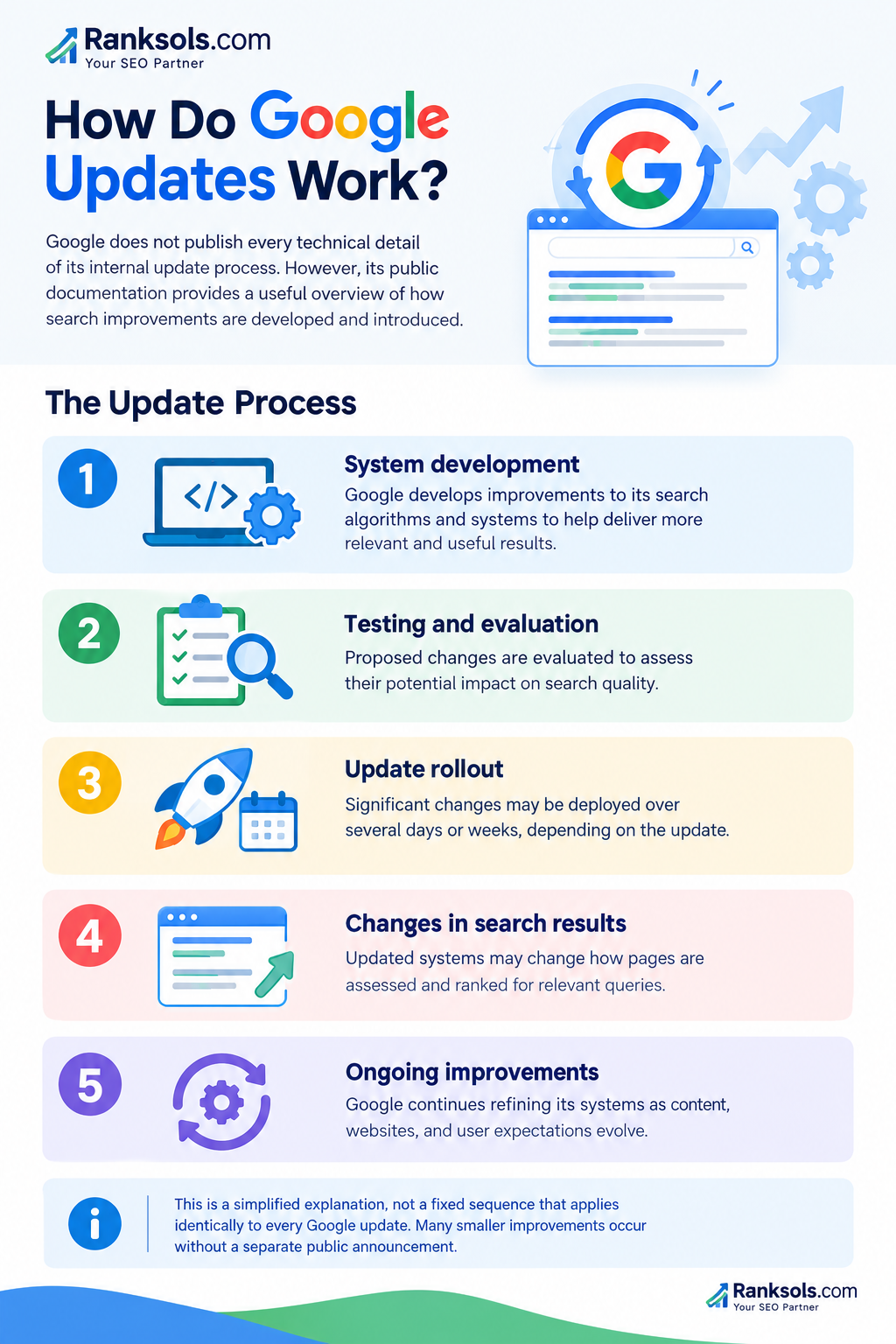
Google does not publish every technical detail of its internal update process. However, its public documentation provides a useful overview of how search improvements are developed and introduced.
The process can be understood through these general stages:
System development: Google develops improvements to its search algorithms and systems to help deliver more relevant and useful results.
Testing and evaluation: Proposed changes are evaluated to assess their potential impact on search quality.
Update rollout: Significant changes may be deployed over several days or weeks, depending on the update.
Changes in search results: Updated systems may change how pages are assessed and ranked for relevant queries.
Ongoing improvements: Google continues refining its systems as content, websites, and user expectations evolve.
This is a simplified explanation, not a fixed sequence that applies identically to every Google update. Many smaller improvements occur without a separate public announcement.
What Are the Main Types of Google Updates?
Google makes different types of changes to improve its search systems. Two important categories are core updates and spam updates.
1. Core Updates
Core updates involve broad changes to Google’s overall ranking systems. Their purpose is to improve the relevance and usefulness of search results rather than target specific websites or individual pages.
A core update can change the relative positions of competing pages. A page that loses visibility may not be poor quality or in violation of Google’s policies; other content may simply be assessed differently under the updated systems.
2. Spam Updates
Spam updates involve notable improvements to Google’s automated systems for detecting search spam. These systems help identify practices that violate Google’s spam policies.
If a website experiences a decline following a spam update, its owner should review the relevant policies and investigate whether prohibited practices are present. The appropriate response depends on the actual issue, and recovery is not guaranteed.
3. Other Search System Improvements
Google also makes smaller, ongoing improvements to its ranking systems and search experiences. These changes may not receive individual announcements because they are not considered significant enough to warrant a separate public update.
As a result, not every ranking fluctuation can be attributed to a named Google update.
Why Do Google Updates Matter for SEO?
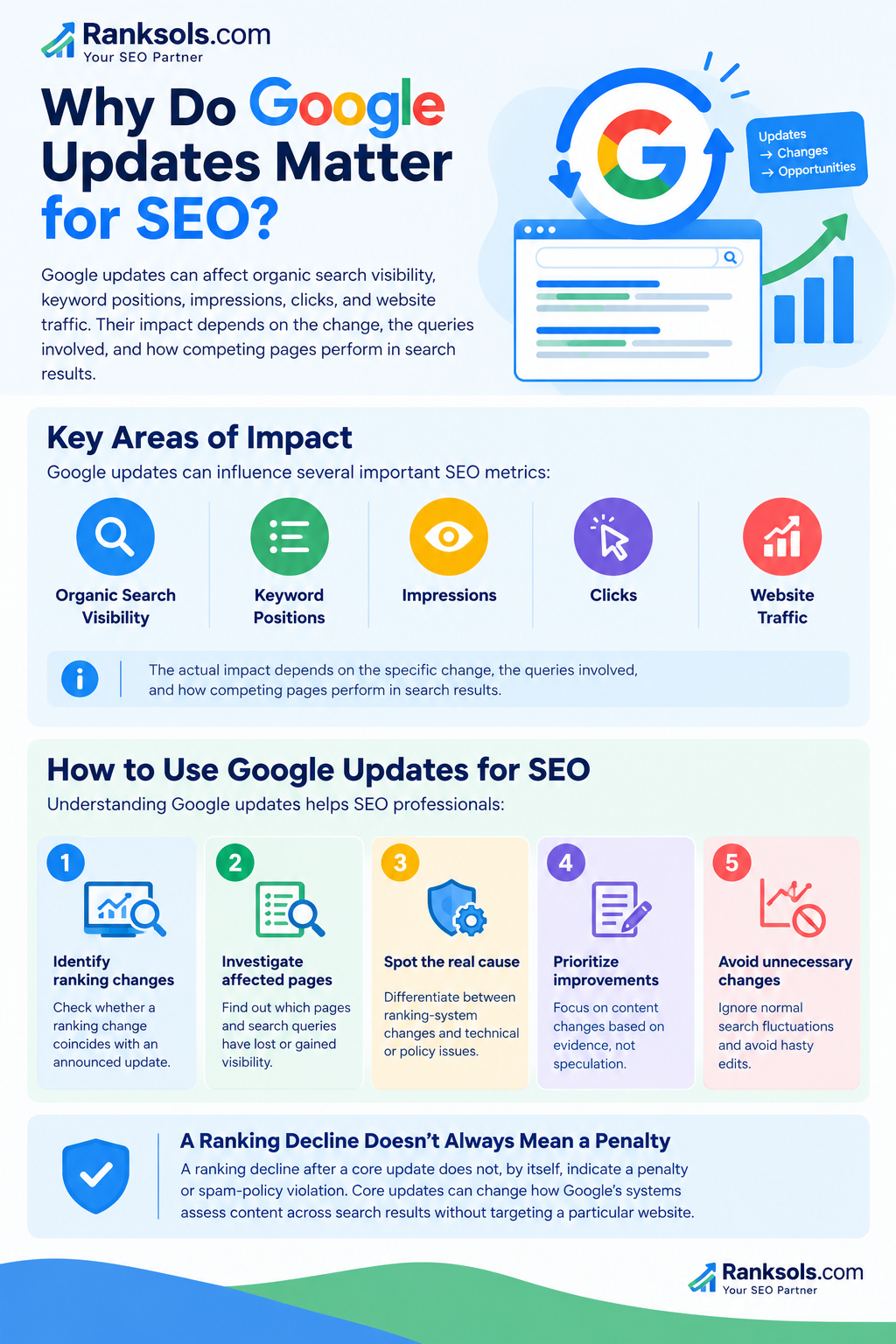
Google updates can affect organic search visibility, keyword positions, impressions, clicks, and website traffic. Their impact depends on the change, the queries involved, and how competing pages perform in search results.
Understanding Google updates helps SEO professionals:
Identify whether a ranking change coincides with an announced update.
Investigate which pages and search queries have lost or gained visibility.
Distinguish possible ranking-system changes from technical or policy issues.
Prioritize content improvements based on evidence rather than speculation.
Avoid unnecessary changes in response to normal search fluctuations.
A ranking decline after a core update does not, by itself, indicate a penalty or spam-policy violation. Core updates can change how Google’s systems assess content across search results without targeting a particular website.
What Should You Do After a Google Update?
If your website experiences a noticeable change in organic search performance, investigate the cause before making major SEO changes.
1. Confirm the Update
Check the Google Search Status Dashboard to see whether a confirmed ranking update or reported Search issue coincides with the change. Note the rollout dates before drawing conclusions.
2. Compare Search Console Data at the Right Time
For a core update, Google recommends waiting at least one full week after the rollout finishes before analyzing performance in Google Search Console.
Compare a suitable period after the update with a period before the rollout began. Review clicks, impressions, average position, and affected queries and pages. Where relevant, analyze Web Search, Google Images, Video, and News separately.
3. Identify the Extent of the Change
Determine whether the decline affects the entire website, a particular group of pages, or only a small number of queries.
A minor ranking change may not require immediate action. A large, sustained decline deserves a deeper assessment of the affected pages and the website’s overall content quality.
4. Review Content and Technical Issues
Assess whether affected pages provide accurate, useful information that satisfies users’ needs. Also investigate relevant technical problems, recent website changes, and possible spam-policy violations where evidence supports those concerns.
Do not assume that every decline is caused by content quality or a Google update. Several factors may influence organic performance.
5. Make Evidence-Based Improvements
Focus on meaningful improvements that benefit users, such as clarifying information, improving page structure, correcting inaccurate content, or resolving genuine technical issues.
Avoid quick fixes based on unverified SEO theories. Removing content or changing pages solely because rankings dropped can be counterproductive if the underlying cause has not been identified.
6. Monitor Performance Over Time
Google’s systems may take days or several months to reflect the effects of improvements. Some changes may be recognized through ongoing system updates, while others may take longer.
There is no guaranteed recovery timeline, and making improvements does not ensure that rankings will return to their previous positions.
Do You Need to Change Your SEO Strategy After Every Google Update?
No. Website owners do not need to change their SEO strategy after every update.
A more reliable approach is to follow Google’s published guidance, maintain technically accessible pages, publish useful content, and monitor organic search performance. Changes should address identified problems or meaningful opportunities rather than speculative ranking theories.
For businesses experiencing sustained ranking changes, Ranksols can help assess organic search performance, review affected pages, and identify potential content or technical issues. A structured review provides a more informed basis for SEO decisions than reacting to every fluctuation.
Frequently Asked Questions
How often does Google update its algorithm?
Google makes search-system improvements regularly throughout the year. Significant core updates occur several times a year, while smaller improvements may happen continuously.
Do Google updates affect every website?
No. The impact varies by website, page, query, and update. Some websites experience noticeable ranking changes, while others see little measurable difference.
How long does a Google update take to roll out?
The rollout period depends on the update. Some updates finish within days, while others may take several weeks. Check Google’s official ranking updates history for the relevant announcement and completion date.
Can a website recover after a Google update?
A website may regain visibility after meaningful improvements, but recovery is not guaranteed. The outcome depends on the underlying issues, how Google’s systems reassess the content, and changes in the wider search results. Improvements may take days or several months to show an effect.
Final Thoughts
Google updates improve how search systems evaluate and rank content. When rankings change, website owners should confirm the update, analyze Search Console data at the appropriate time, and investigate the affected pages before making significant changes.
Following Google’s official guidance and prioritizing evidence-based improvements is a more reliable approach than chasing every algorithm change.
Official resources: