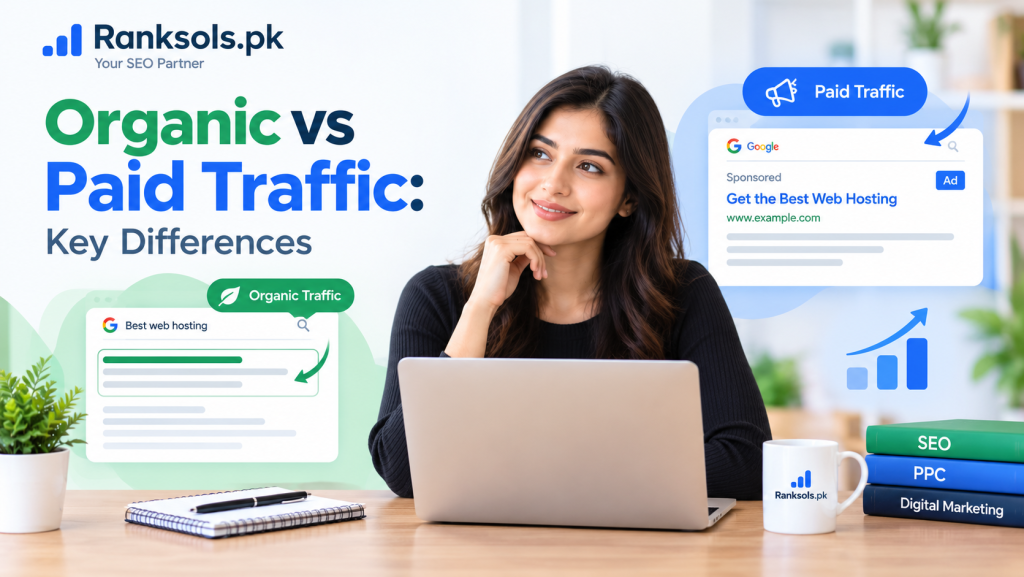
Organic traffic and paid traffic are two common sources of website visitors. Organic search traffic comes from unpaid search engine results, while paid traffic comes from advertising campaigns. Understanding the difference helps businesses evaluate their marketing options, manage acquisition costs, and choose suitable ways to attract potential customers.
This guide explains how organic and paid traffic differ, when each approach is useful, and how to measure their performance.
What Is Organic Traffic?
Organic search traffic refers to visitors who reach a website by clicking unpaid listings in search engine results. These visits commonly come from Google, Bing, and other search engines.
Search engine optimization (SEO) helps websites improve their visibility in organic search results by making their content relevant, useful, accessible, and technically sound.
For example, when someone searches for “best web hosting for small businesses” and clicks an unpaid search result, that visit counts as organic search traffic.
Key characteristics of organic traffic:
Comes from unpaid search engine listings.
Depends on search visibility, relevance, and competition.
Requires time and resources to develop through SEO.
Can continue generating visits without a direct advertising charge for each click.
May fluctuate as search rankings, search demand, and competition change.
Organic traffic can support long-term search visibility, but consistent results are not guaranteed.
For a more detailed explanation, read What Is Organic Traffic?.
What Is Paid Traffic?
Paid traffic refers to visitors who arrive through paid advertising campaigns. Businesses pay advertising platforms to display their ads to relevant audiences or alongside search results.
Common sources include Google Ads, Microsoft Advertising, paid social media campaigns, and display advertising.
For example, if a business runs a Google Ads campaign for “SEO services in Pakistan” and someone clicks its sponsored search listing, that visit is attributed to paid advertising.
Key characteristics of paid traffic:
Comes from paid advertising campaigns.
Can generate visits soon after a campaign launches and receives approval.
Requires an advertising budget.
Offers targeting and campaign measurement options.
Generally requires continued advertising spend to maintain paid exposure.
Actual results depend on factors such as campaign setup, competition, audience targeting, budget, and landing-page relevance.
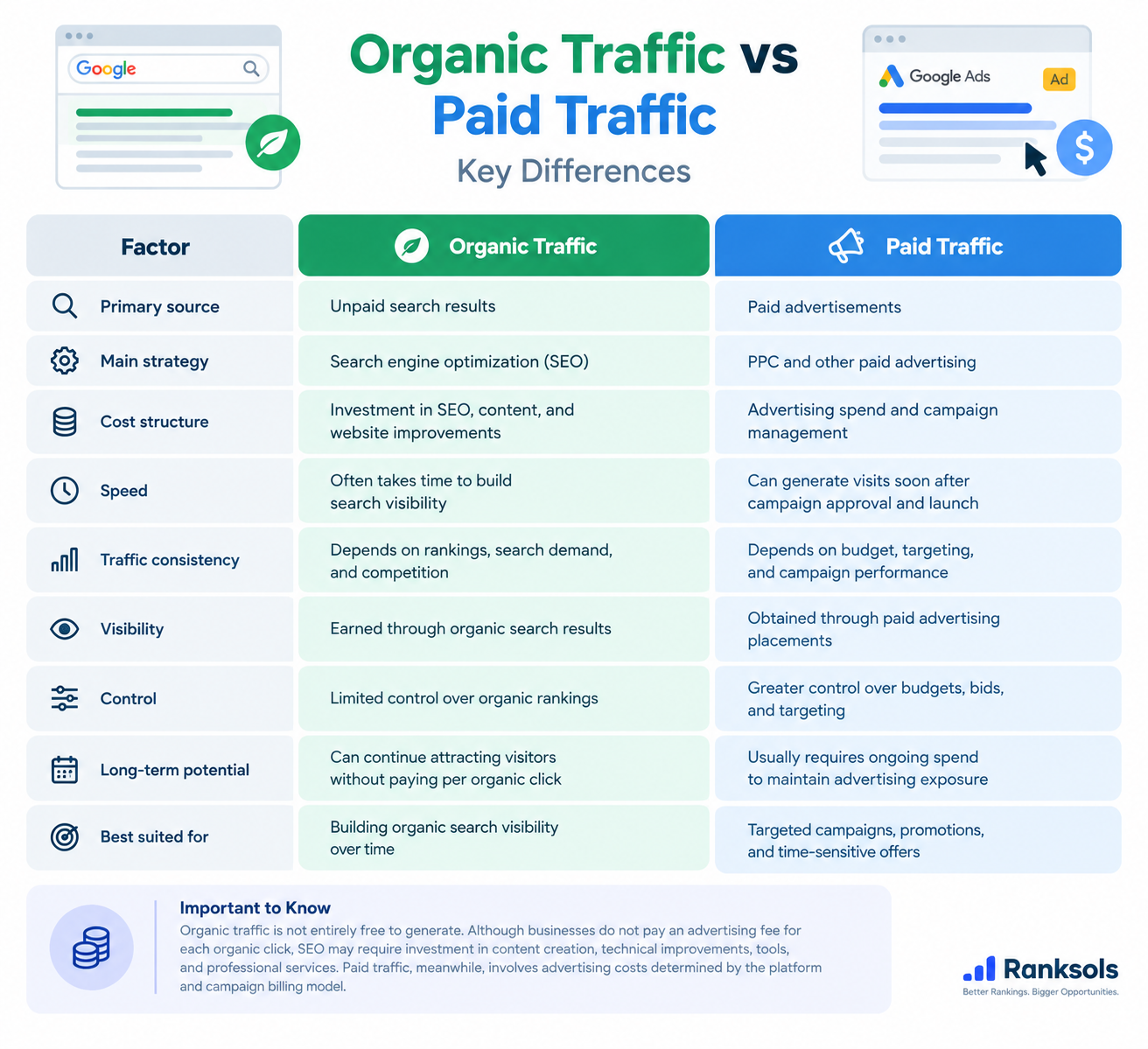
Organic Traffic vs Paid Traffic: Key Differences
| Factor | Organic Traffic | Paid Traffic |
|---|---|---|
| Primary source | Unpaid search results | Paid advertisements |
| Main strategy | Search engine optimization (SEO) | PPC and other paid advertising |
| Cost structure | Investment in SEO, content, and website improvements | Advertising spend and campaign management |
| Speed | Often takes time to build search visibility | Can generate visits soon after campaign approval and launch |
| Traffic consistency | Depends on rankings, search demand, and competition | Depends on budget, targeting, and campaign performance |
| Visibility | Earned through organic search results | Obtained through paid advertising placements |
| Control | Limited control over organic rankings | Greater control over budgets, bids, and targeting |
| Long-term potential | Can continue attracting visitors without paying per organic click | Usually requires ongoing spend to maintain advertising exposure |
| Best suited for | Building organic search visibility over time | Targeted campaigns, promotions, and time-sensitive offers |
Organic traffic is not entirely free to generate. Although businesses do not pay an advertising fee for each organic click, SEO may require investment in content creation, technical improvements, tools, and professional services. Paid traffic, meanwhile, involves advertising costs determined by the platform and campaign billing model.
Which Is Better: Organic Traffic or Paid Traffic?
Neither approach is universally better. The right choice depends on business goals, budget, competition, timeline, and available resources.
Organic traffic may be more suitable when:
You want to develop long-term search visibility.
Your audience regularly searches for information about your products or services.
You can invest in useful content and ongoing SEO improvements.
You want to reduce dependence on paid advertising over time.
Paid traffic may be more suitable when:
You need to promote a time-sensitive offer.
You want to test a landing page or advertising message.
You need to target particular locations or audience segments.
You have a defined advertising budget and measurable conversion goals.
Businesses should evaluate both channels by their ability to attract qualified visitors, generate conversions, and contribute to revenue—not simply by the number of visits they produce.
Can You Use Organic and Paid Traffic Together?
Yes. Organic and paid traffic can complement each other within a digital marketing strategy.
For example, a web hosting company might run paid search advertisements to promote a limited-time offer while publishing SEO content about hosting plans, website performance, and hosting comparisons. The advertising campaign can help attract visitors during the promotion, while organic content can build search visibility over time.
These channels serve different purposes, and paid advertising performance does not guarantee improved organic rankings.
For businesses with sufficient resources, combining both approaches can provide flexibility across different marketing goals without relying entirely on one traffic source.
How Do You Measure Organic and Paid Traffic?
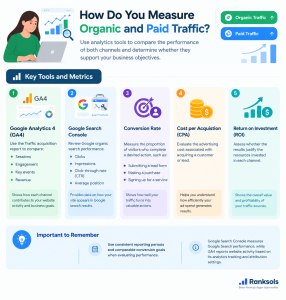
Use analytics tools to compare the performance of both channels and determine whether they support your business objectives.
Google Analytics 4 (GA4): Use the Traffic acquisition report to compare sessions, engagement, key events, and revenue across traffic channels.
Google Search Console: Review Google organic search clicks, impressions, click-through rate, and average position.
Conversion rate: Measure the proportion of visitors who complete a desired action, such as submitting a lead form or making a purchase.
Cost per acquisition (CPA): Evaluate the advertising cost associated with acquiring a customer or lead.
Return on investment (ROI): Assess whether the results justify the resources invested in each channel.
Use consistent reporting periods and comparable conversion goals when evaluating performance. Remember that Google Search Console measures Google Search performance, while GA4 reports website activity based on its analytics tracking and attribution settings.
Conclusion
Organic traffic and paid traffic offer different ways to attract website visitors. Organic search traffic supports unpaid search visibility through SEO, while paid traffic provides advertising-driven exposure through campaigns.
The right approach depends on your business objectives, resources, and timeline. For businesses looking to strengthen their organic search presence, Ranksols can help identify SEO opportunities aligned with their website and business goals.