Identifying search intent means understanding what users want to accomplish when they enter a query into a search engine. In SEO, it helps you create content that matches users’ expectations and provides relevant answers.
Instead of choosing keywords based only on search volume, analyze the purpose behind each query. This helps you decide whether a search needs an informational guide, a comparison article, a website page, or a product or service page.
1. Analyze the Search Query
Start by examining the words and phrases people use in their searches. Certain terms can indicate what users want to achieve.
Informational: “What is technical SEO?” or “How does indexing work?”
Navigational: “Google Search Console login” or “Ranksols.pk”
Commercial investigation: “Best SEO agency in Pakistan” or “Ahrefs vs. Semrush”
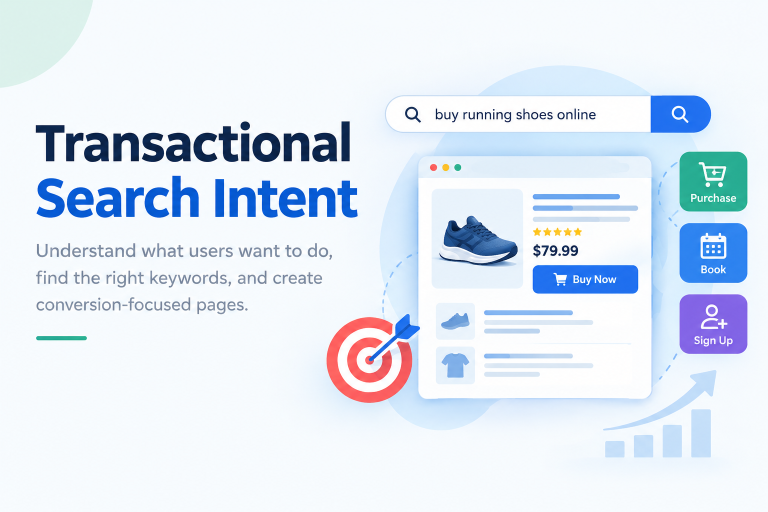
Transactional: “Hire an SEO agency” or “Buy web hosting”
These patterns provide useful clues, but the wording alone does not always reveal the complete search intent. Consider the wider context of the query and the results Google displays.
2. Analyze the Google Search Results
One of the most practical ways to identify search intent is to examine the search engine results pages (SERPs) for your target keyword.
Follow these steps:
Search for your target keyword. Use the relevant country and language settings for your intended audience.
Review the top organic results. Examine page titles, content formats, and page types rather than relying on a single result.
Identify the dominant pattern. Determine whether the results mainly contain tutorials, comparison guides, product pages, service pages, or official websites.
Look for mixed intent. Some search results may serve different purposes, so consider whether users have more than one likely goal.
Choose a suitable content format. Use the dominant pattern as a guide, then make sure your content directly satisfies the user’s needs.
For example, if a keyword mainly returns educational articles, an informational guide may be appropriate. If the results primarily contain product comparisons and reviews, users may be evaluating different options.
Search results provide useful evidence of the intent Google is serving for a query, but they do not reveal every user’s individual motivation. Results can also vary by location, time, and search context.
3. Identify the Primary Search Intent
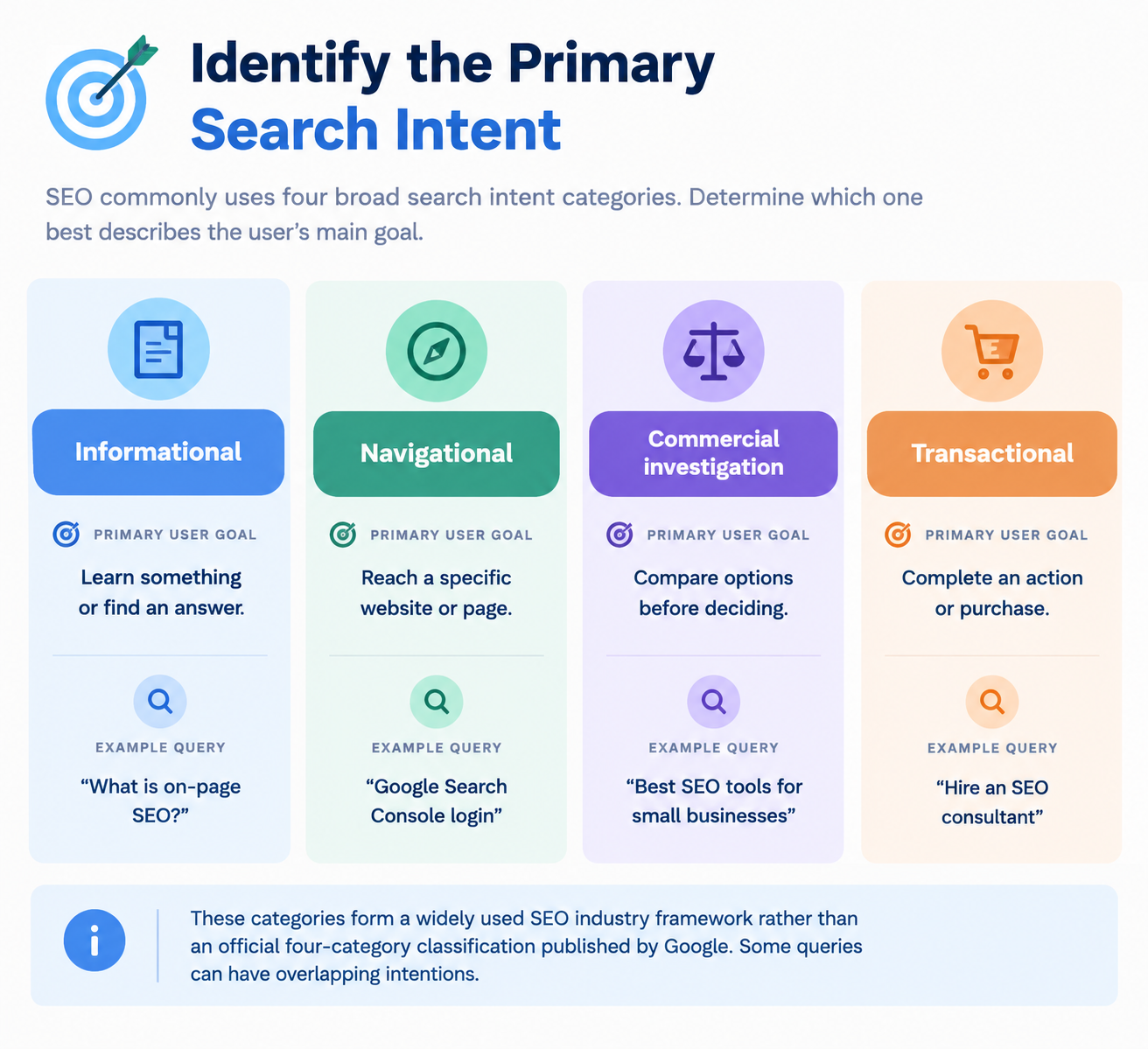
SEO commonly uses four broad search intent categories. Determine which one best describes the user’s main goal.
| Search intent | Primary user goal | Example query |
|---|---|---|
| Informational | Learn something or find an answer | What is on-page SEO? |
| Navigational | Reach a specific website or page | Google Search Console login |
| Commercial investigation | Compare options before deciding | Best SEO tools for small businesses |
| Transactional | Complete an action or purchase | Hire an SEO consultant |
These categories form a widely used SEO industry framework rather than an official four-category classification published by Google. Some queries can have overlapping intentions.
4. Apply Search Intent Analysis to a Real Keyword
Consider the keyword “best SEO agency in Pakistan.”
A practical analysis would look like this:
Query wording: The word “best” suggests that the user wants to evaluate different providers.
SERP analysis: Review the actual results to see whether they mainly contain agency comparisons, reviews, provider listings, or service pages.
Likely intent: Commercial investigation, if the results support that interpretation.
Suitable content: A useful comparison or evaluation page that helps readers assess agencies using relevant criteria.
Content objective: Help users make an informed decision rather than simply promote a service.
This example illustrates the process rather than confirming the current intent of the live keyword. Always check the actual SERPs before finalizing a content plan.
When search results show mixed intent, identify the dominant purpose and decide whether one page can satisfy the secondary need or whether a separate page would serve a genuinely different user goal.
5. Match Your Content to the Search Intent
Once you understand the likely intent, choose a page type that satisfies it.
Informational intent: Create educational articles, step-by-step guides, explanations, or tutorials.
Navigational intent: Make the relevant brand or destination easy to find and access.
Commercial investigation intent: Provide useful comparisons, reviews, evaluation criteria, and decision-making information.
Transactional intent: Offer relevant service pages, product pages, pricing information, or clear ways to complete an action.
For example, targeting “what is crawl budget” with a direct educational article is generally more appropriate than creating a sales-focused service page.
Before creating a new page, check whether an existing page on your website already satisfies the same search intent. If it does, improving that page may be more appropriate than publishing another article with a similar purpose. Create a separate page when it serves a meaningfully different user need.
6. Use Search Console to Review Existing Content
If you are optimizing an existing page, Google Search Console can provide additional evidence about the queries associated with its search visibility.
Review the available query and page performance data to determine:
Which search queries generate impressions for the page.
Whether those queries relate to the page’s intended topic.
Whether the page appears to attract the audience it was designed to serve.
Whether the content needs clearer explanations or a more suitable format.
For example, if an article intended to explain a technical SEO concept receives impressions for related beginner questions, review whether the page answers those questions adequately.
Search Console data can help you evaluate how a page performs for actual queries, but it does not independently establish user intent. Combine it with SERP analysis and a review of the page’s content before making changes.
7. Consider the User’s Stage in the Buying Journey
Search intent can also provide clues about where someone is in the decision-making process.
A user searching “what is SEO” is likely learning about the subject. Someone searching “best SEO agency in Lahore” may be evaluating providers, while a person searching “hire SEO agency in Lahore” may be ready to contact a business.
These stages can overlap, so avoid assuming that every user follows a fixed journey. Use the query and search results together to determine the most appropriate content approach.
Common Mistakes When Identifying Search Intent
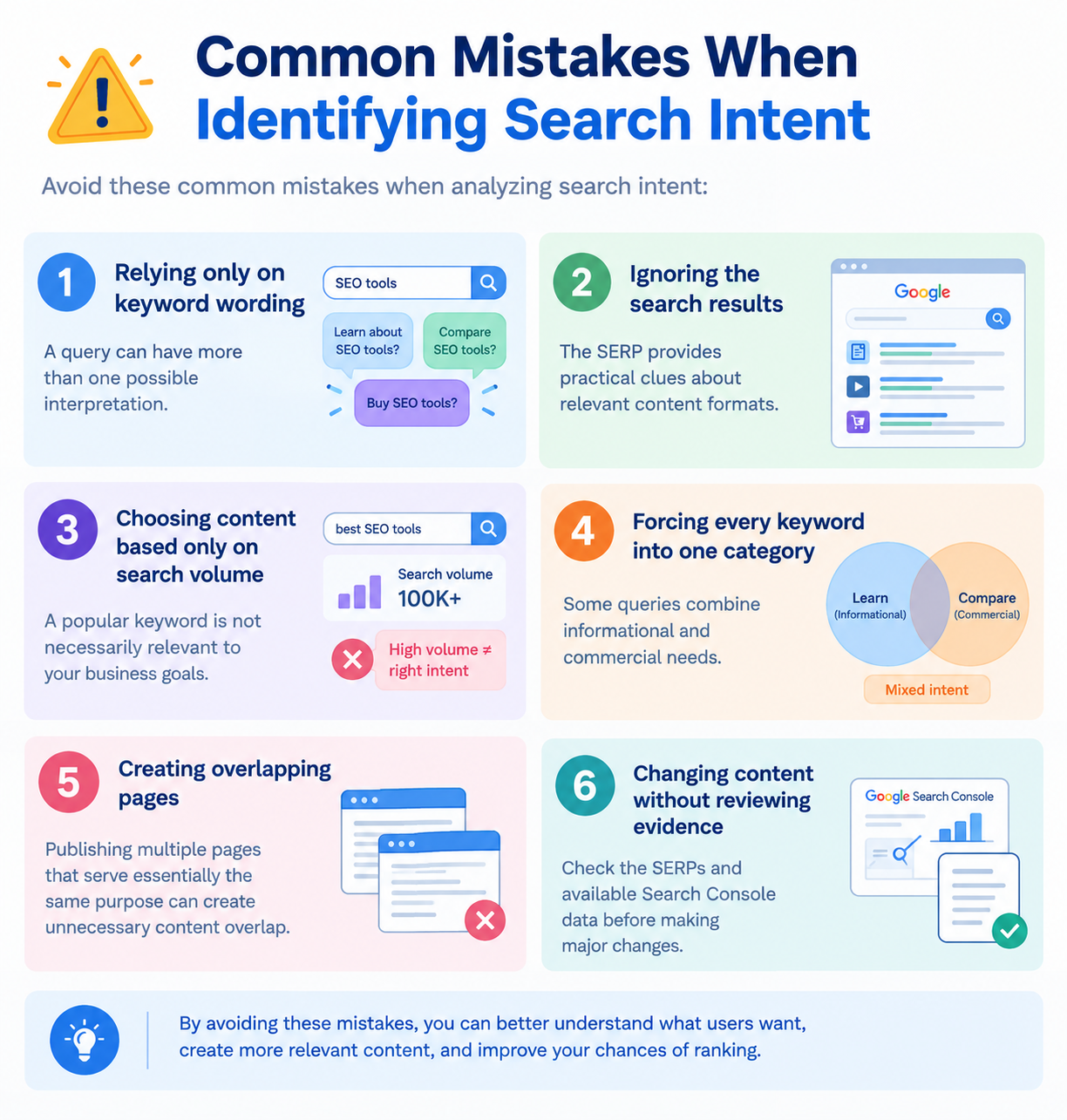
Avoid these common mistakes when analyzing search intent:
Relying only on keyword wording: A query can have more than one possible interpretation.
Ignoring the search results: The SERP provides practical clues about relevant content formats.
Choosing content based only on search volume: A popular keyword is not necessarily relevant to your business goals.
Forcing every keyword into one category: Some queries combine informational and commercial needs.
Creating overlapping pages: Publishing multiple pages that serve essentially the same purpose can create unnecessary content overlap.
Changing content without reviewing evidence: Check the SERPs and available Search Console data before making major changes.
Final Thoughts
Identifying search intent helps you understand what users expect from a search and choose the most appropriate content format. By analyzing the query, reviewing Google’s search results, and checking existing page performance where data is available, you can develop a more relevant and useful SEO content strategy.
If you need help aligning your website content with search intent, Ranksols can help you evaluate your SEO content strategy and identify opportunities to improve relevance and usability.
For a broader understanding of the topic, explore our guide to the four types of search intent, which explains the main categories and their role in SEO.