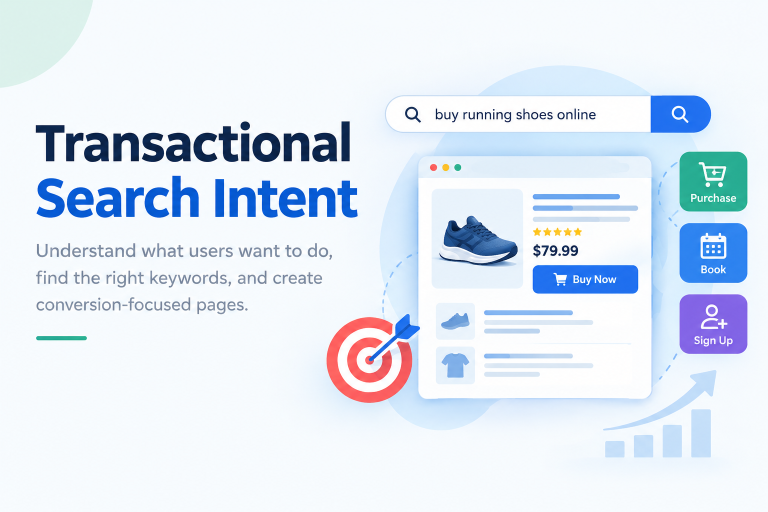
Navigational search intent occurs when a user searches for a specific website, brand, or webpage they want to visit. Instead of looking for general information or comparing different options, the user wants to reach a particular online destination.
For example, someone searching for “Facebook login,” “Ranksols.pk,” or “Google Search Console” may be trying to access a specific website or service.
Understanding navigational search intent helps SEO professionals distinguish destination-focused searches from queries where users want to learn about a subject, compare options, or complete a transaction.
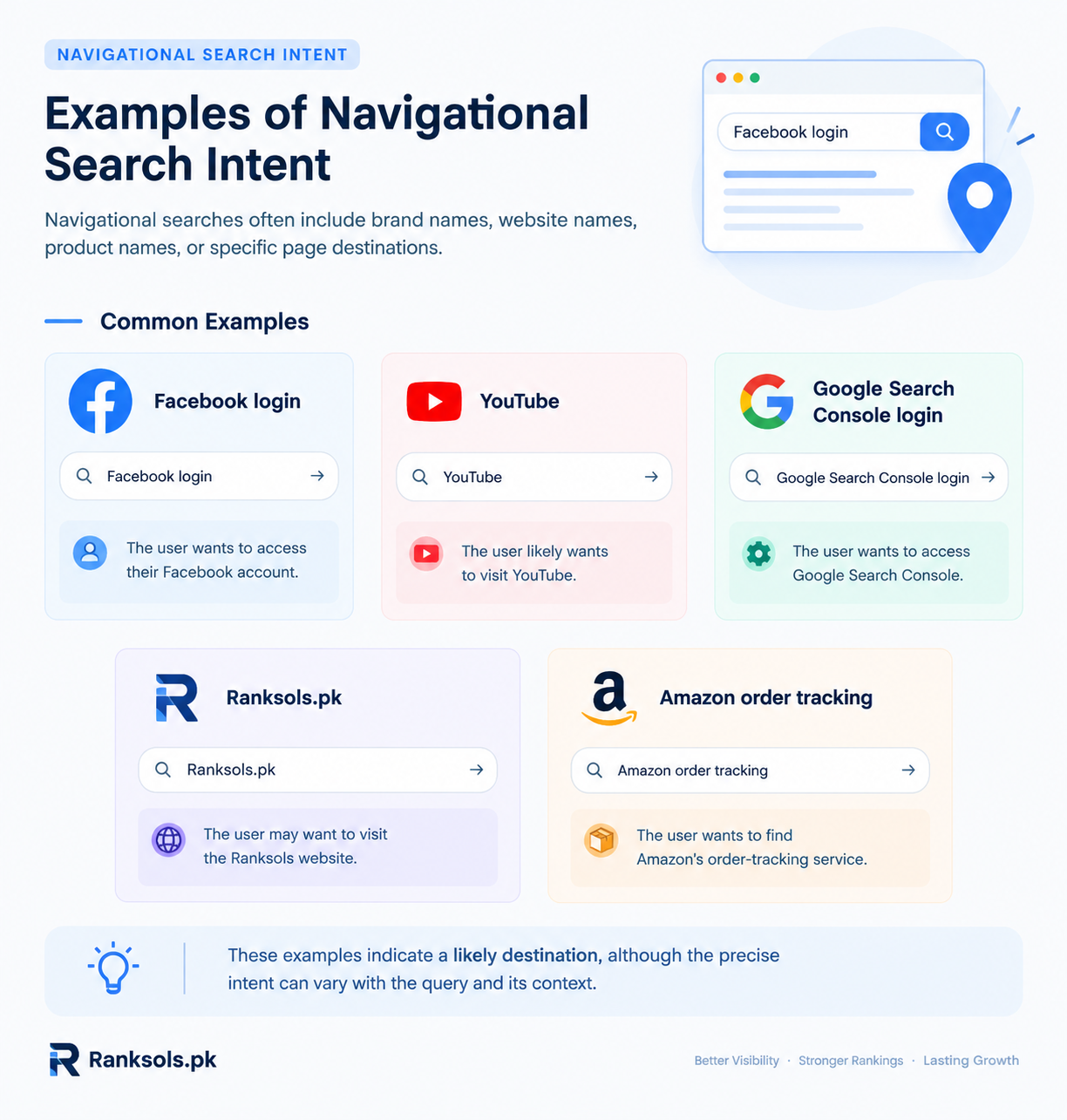
Examples of Navigational Search Intent
Navigational searches often include brand names, website names, product names, or specific page destinations.
Examples include:
“Facebook login” — The user wants to access their Facebook account.
“YouTube” — The user likely wants to visit YouTube.
“Google Search Console login” — The user wants to access Google Search Console.
“Ranksols.pk” — The user may want to visit the Ranksols website.
“Amazon order tracking” — The user wants to find Amazon’s order-tracking service.
These examples indicate a likely destination, although the precise intent can vary with the query and its context.
Are Branded Searches Always Navigational?
No. A branded search includes a company, product, or brand name, but it does not necessarily indicate navigational intent.
For example:
“Ranksols” — May indicate that the user wants to visit the website.
“Ranksols reviews” — Suggests that the user wants to evaluate the company.
“Ranksols SEO services” — May indicate commercial research or an interest in the company’s services.
The distinction matters because branded search describes the query, while navigational intent describes the user’s goal. A branded query may have navigational, informational, or commercial intent.
How to Identify Navigational Search Intent
SEO professionals can use several signals to understand whether a query is navigational.
Query wording: Brand names combined with terms such as “login,” “website,” or a specific page name can indicate a destination-focused search.
Search results: The presence of an official website or a specific destination page can help clarify what users are likely seeking.
User goal: Determine whether the user wants to visit a destination or instead learn about, review, or compare something.
No single signal confirms intent in every case. When a query is ambiguous, consider its wording and the search results together rather than classifying it by keyword alone.
Why Does Navigational Search Intent Matter for SEO?
Navigational search intent helps businesses understand how users find their websites and access important pages.
People may search for a business by name after encountering it through recommendations, advertising, previous visits, or other marketing activities. Making the official website easy to identify and navigate can help these users reach the right destination.
Businesses can support navigational searches by:
Maintaining an accessible and functional website.
Using a recognizable and consistent brand name.
Writing descriptive titles for the homepage and important pages.
Making contact, service, support, and account pages easy to find.
Keeping relevant business information consistent across online platforms.
These practices support discoverability and usability, although they do not guarantee particular search rankings.
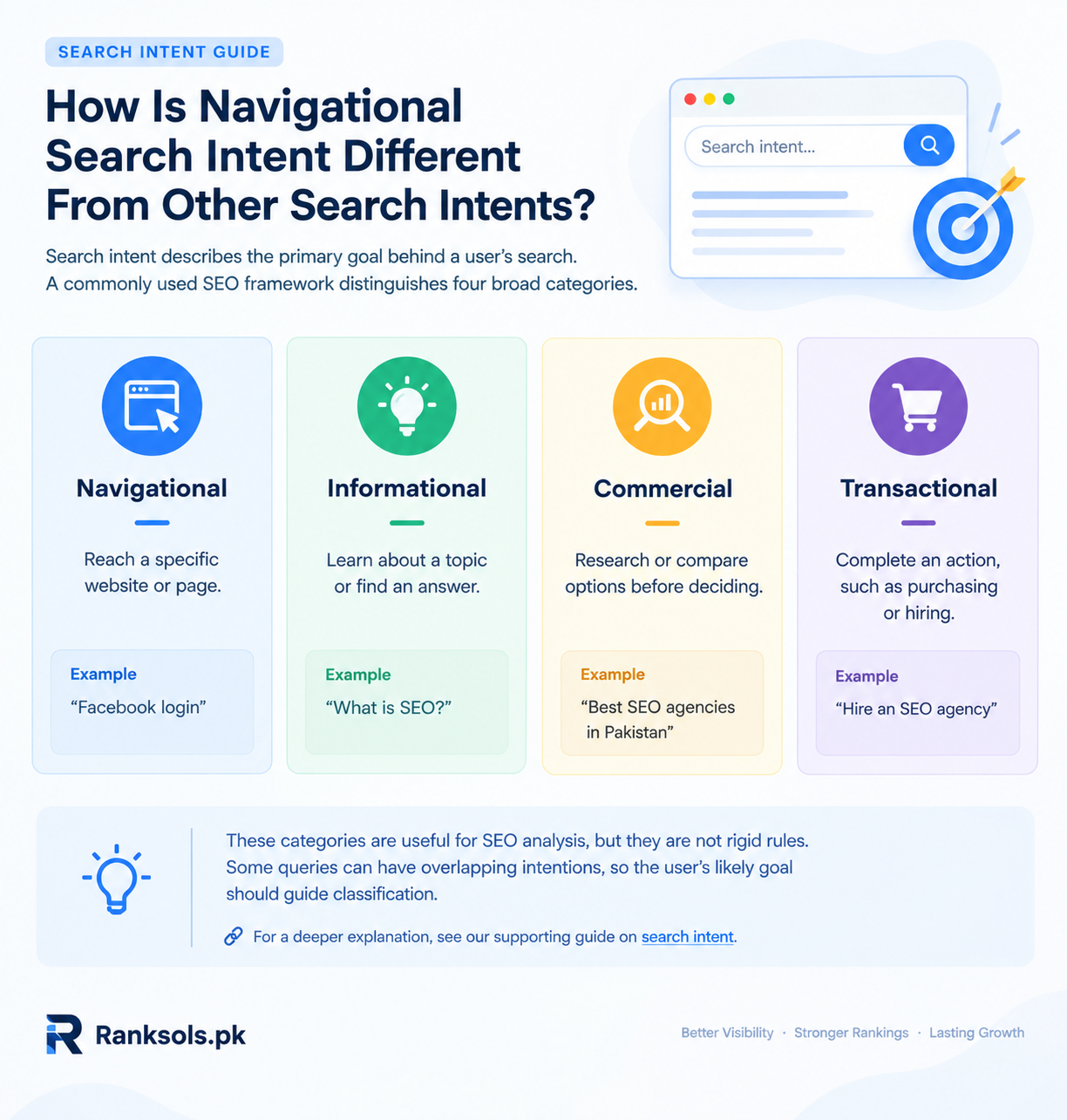
How Is Navigational Search Intent Different From Other Search Intents?
Search intent describes the primary goal behind a user’s search. A commonly used SEO framework distinguishes four broad categories.
| Search intent | User’s primary goal | Example |
|---|---|---|
| Navigational | Reach a specific website or page | “Facebook login” |
| Informational | Learn about a topic or find an answer | “What is SEO?” |
| Commercial | Research or compare options before deciding | “Best SEO agencies in Pakistan” |
| Transactional | Complete an action, such as purchasing or hiring | “Hire an SEO agency” |
These categories are useful for SEO analysis, but they are not rigid rules. Some queries can have overlapping intentions, so the user’s likely goal should guide classification.
For a deeper explanation, see our supporting guide on [search intent].
How Can Businesses Optimize for Navigational Searches?
Businesses cannot control every branded search or guarantee that their website will appear first. However, several practical steps can help users identify and access the right pages.
1. Maintain Consistent Brand Identification
Use the business name consistently across the website and relevant business profiles. Clear branding helps users recognize the official destination in search results.
2. Optimize Important Page Titles
Write accurate, descriptive title tags for the homepage and important pages. Include the brand name when it helps identify the website, and make each title relevant to its specific page.
3. Make Important Pages Easy to Find
Use clear website navigation and descriptive internal links to help visitors reach service pages, contact information, account areas, and support resources.
4. Maintain Technical Accessibility
Ensure important pages are accessible to users and that relevant internal links can be discovered by search engines. Review crawling and indexing issues when appropriate, while remembering that crawling does not guarantee that a page will be indexed or shown in search results.
How Can You Measure Branded Search Performance?
Google Search Console can help website owners understand how people discover their websites through Google Search.
For eligible properties, the Search results Performance report includes a branded queries filter that can help separate branded from non-branded query performance. You can examine metrics such as clicks, impressions, click-through rate, and average position.
This analysis can help businesses understand how their brand-related searches perform and identify queries that may deserve further investigation.
However, branded search performance is not the same as navigational search performance. Branded queries can also reflect informational or commercial intent, so interpret the data in context.
Frequently Asked Questions
What is an example of navigational search intent?
Searching for “Facebook login” is a common example because the user wants to reach a specific website or account-access page.
Are branded searches always navigational?
No. A search such as “Ranksols reviews” includes a brand name but is more likely to reflect commercial investigation than a desire to visit the homepage directly.
Is navigational search intent important for small businesses?
Yes. Potential customers may search for a small business by name to find its website, services, contact information, or location. Making these destinations easy to identify can improve the user experience.
How can I check branded searches for my website?
Use the Google Search Console Performance report and, when available for your property, its branded queries filter. Compare relevant metrics for branded and non-branded searches, keeping in mind that branded queries do not all have navigational intent.
Conclusion
Navigational search intent describes searches where users want to reach a specific website, brand, or webpage. Understanding this intent helps SEO professionals distinguish destination-focused queries from informational, commercial, and transactional searches.
Businesses should focus on recognizable branding, descriptive page titles, accessible website navigation, and a reliable user experience to help people find the right destination.
If your business needs help improving its website structure, branded search visibility, or overall organic search performance, Ranksols can help you identify relevant SEO improvements based on your website’s needs.