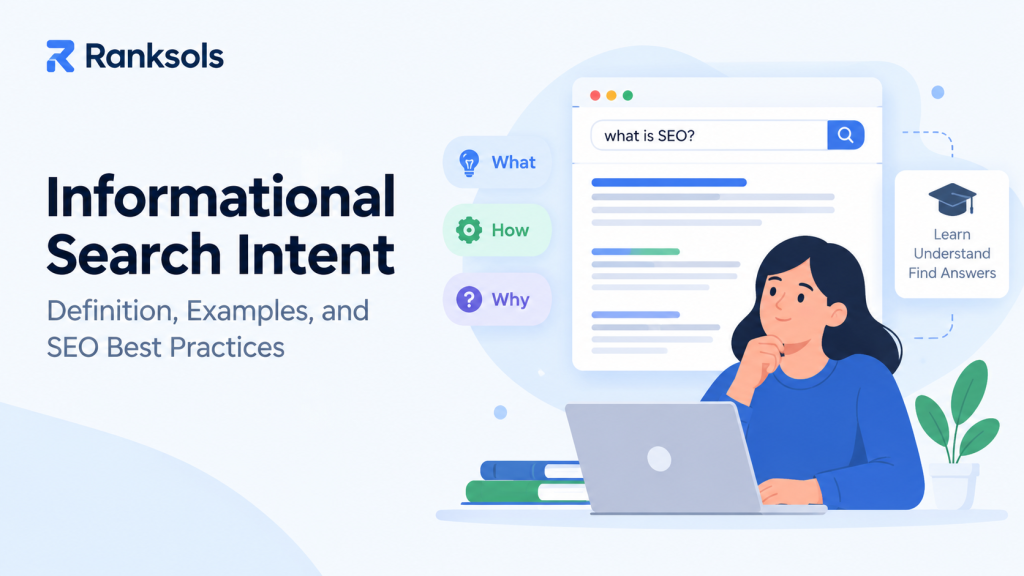
Informational search intent occurs when users search to learn about a topic, understand a concept, or find an answer to a question. They are primarily seeking information rather than immediately purchasing a product or service.
Understanding informational intent helps SEO professionals create content that matches users’ needs and provides relevant answers in search results.
What Is Informational Search Intent?
Informational search intent describes the purpose behind a search query when someone wants to gain knowledge, understand a concept, or solve a problem.
These searches often include words such as what, how, why, when, and who. However, query wording alone does not determine search intent. The user’s underlying goal and the content appearing in search results also matter.
For example, someone searching for “what is technical SEO” likely wants an explanation, while someone searching for “how to improve website speed” is looking for practical guidance.
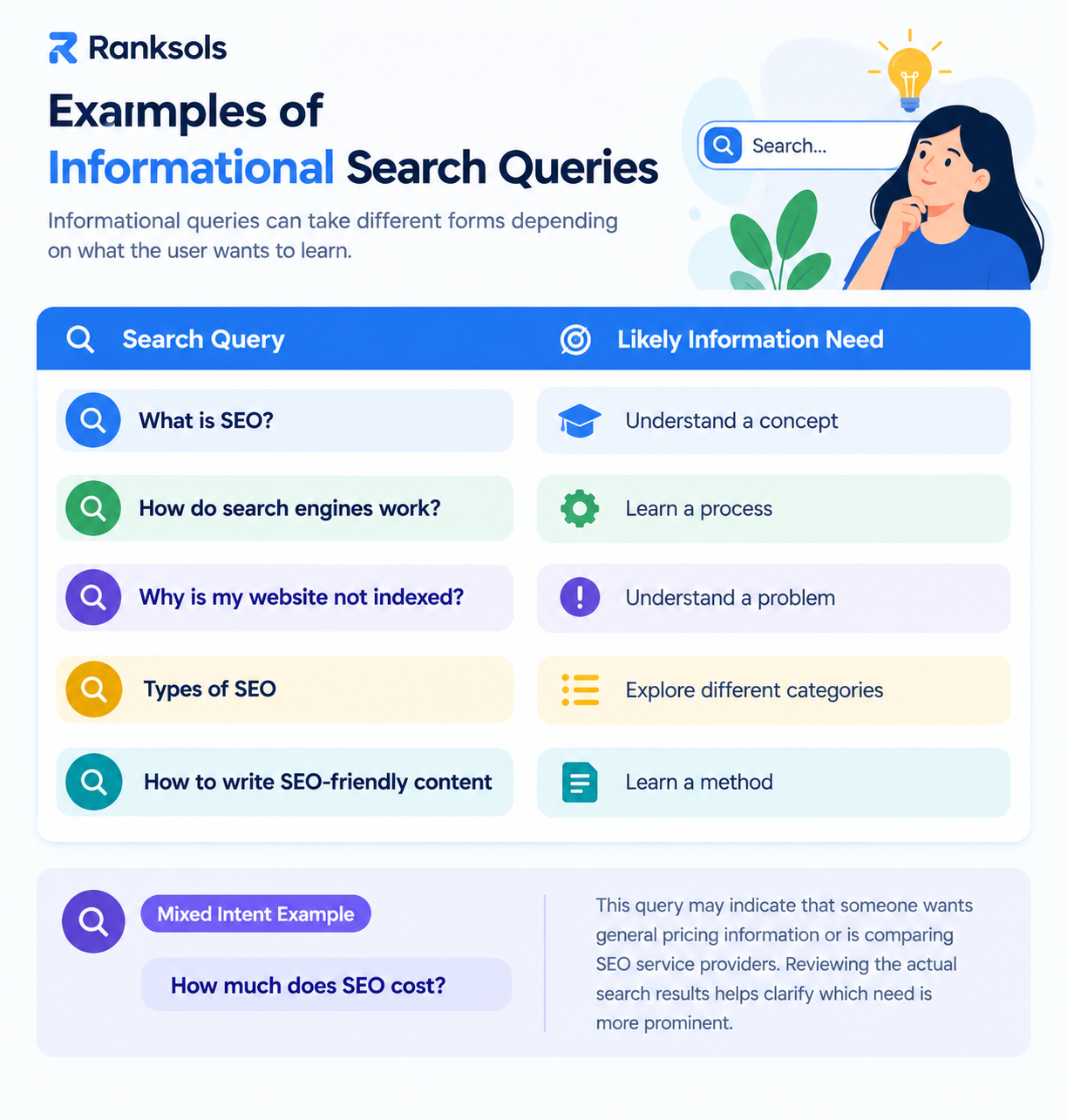
Examples of Informational Search Queries
Informational queries can take different forms depending on what the user wants to learn.
| Search query | Likely information need |
|---|---|
| What is SEO? | Understand a concept |
| How do search engines work? | Learn a process |
| Why is my website not indexed? | Understand a problem |
| Types of SEO | Explore different categories |
| How to write SEO-friendly content | Learn a method |
Some queries can have mixed intent. For example, “how much does SEO cost?” may indicate that someone wants general pricing information or is comparing SEO service providers. Reviewing the actual search results helps clarify which need is more prominent.
Why Is Informational Search Intent Important for SEO?
Recognizing informational intent helps you select an appropriate content format and answer the questions your audience is asking.
When users want to learn about a topic, an educational article or tutorial is generally more suitable than a product page focused on selling a service.
Understanding this intent can help you:
Answer users’ questions: Provide information that directly addresses their needs.
Improve content relevance: Align the page’s purpose with the search query.
Develop related resources: Connect relevant articles within a broader SEO topic cluster.
Build trust: Explain concepts accurately and provide useful examples.
Support the customer journey: Help readers understand a problem before they consider possible solutions.
These practices support a helpful user experience, although matching search intent alone does not guarantee higher rankings.
How to Identify Informational Search Intent
Use these three steps when evaluating a keyword for an SEO article.
1. Examine the Search Query
Look for phrases such as “what is,” “how to,” “why,” “meaning,” “examples,” and “guide.” These modifiers can indicate that users want information, but treat them as clues rather than definitive evidence.
2. Analyze Google’s Search Results
Review the dominant page types appearing for the target keyword. If the results mainly contain definitions, educational articles, tutorials, and explanatory guides, the query likely has informational intent.
Also consider the questions those pages answer and the depth of information they provide. Search results can help you determine whether users need a brief explanation or a more detailed guide.
3. Choose the Appropriate Content Format
Match your content to the information users are seeking.
Definitions: Suitable for “what is” queries.
Step-by-step tutorials: Useful for “how to” queries.
Explanatory articles: Appropriate for “why” questions.
Comparison tables: Helpful when users need to understand differences between related concepts.
The objective is to answer the query clearly without adding unnecessary information.
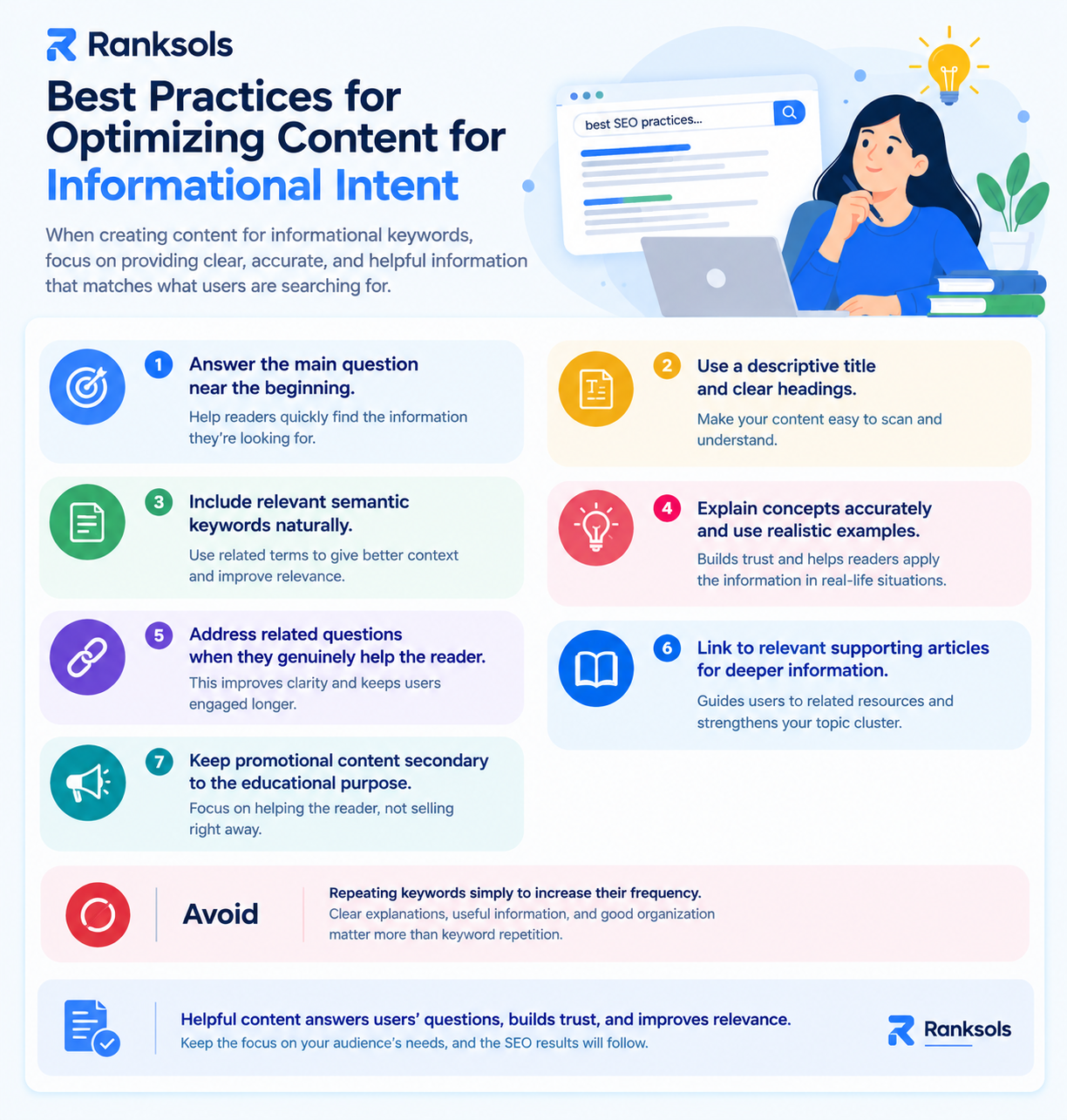
Best Practices for Optimizing Content for Informational Intent
When creating content for informational keywords:
Answer the main question near the beginning.
Use a descriptive title and clear headings.
Include relevant semantic keywords naturally.
Explain concepts accurately and use realistic examples.
Address related questions when they genuinely help the reader.
Link to relevant supporting articles for deeper information.
Keep promotional content secondary to the educational purpose.
Avoid repeating keywords simply to increase their frequency. Clear explanations, useful information, and appropriate organization matter more than keyword repetition.
Can Informational Search Intent Lead to Business Opportunities?
Yes. Although informational searches do not necessarily indicate an immediate intention to purchase, they can introduce readers to a business and its expertise.
For example, someone learning about technical SEO may later need help identifying website issues. A useful educational article can help that reader understand the problem and explore professional assistance when appropriate.
At Ranksols, the goal should be to educate readers first. When relevant, a natural link to an SEO service page can offer a useful next step without distracting from the article’s main purpose.
Frequently Asked Questions
Is informational search intent the same as commercial search intent?
No. Informational intent focuses on learning or finding answers, while commercial intent generally involves researching and comparing products or services before making a purchase decision.
What type of content works best for informational keywords?
Definitions, educational articles, tutorials, explanatory guides, and troubleshooting resources are common formats. The best choice depends on the query and what users need to understand.
Do informational keywords have SEO value if they do not generate immediate sales?
Yes. They can attract relevant visitors, answer early-stage questions, build trust, and introduce readers to related resources. Their business value may develop over time rather than through an immediate conversion.
Conclusion
Informational search intent reflects a user’s desire to learn, understand, or solve a problem. Identifying it helps SEO professionals evaluate keywords, select appropriate content formats, and create useful educational resources.
To understand how informational intent fits into the broader framework, read our guide to Types of Search Intent.
For further learning, explore related Ranksols resources on How Do Search Engines Work? and What Is SEO?