
Web hosting is a service that provides the server resources needed to store, run, and deliver website content over the internet. It allows individuals and businesses to make their websites accessible to visitors without having to manage all the underlying infrastructure themselves.
Whether you are launching a business website, a blog, or an online store, understanding how web hosting works helps you understand how your website becomes available online.
What Is Web Hosting?
Web hosting is a service that makes website files and applications available through internet-connected servers. Depending on the website, these resources may include HTML files, stylesheets, JavaScript, images, application code, and database content.
For example, when you publish a business website, its pages and images must be stored or otherwise made available through a suitable hosting environment. When someone visits the website, the server delivers the requested resources to their browser.
In simple terms, web hosting provides the infrastructure that allows a website to be accessed online.
How Does Web Hosting Work?
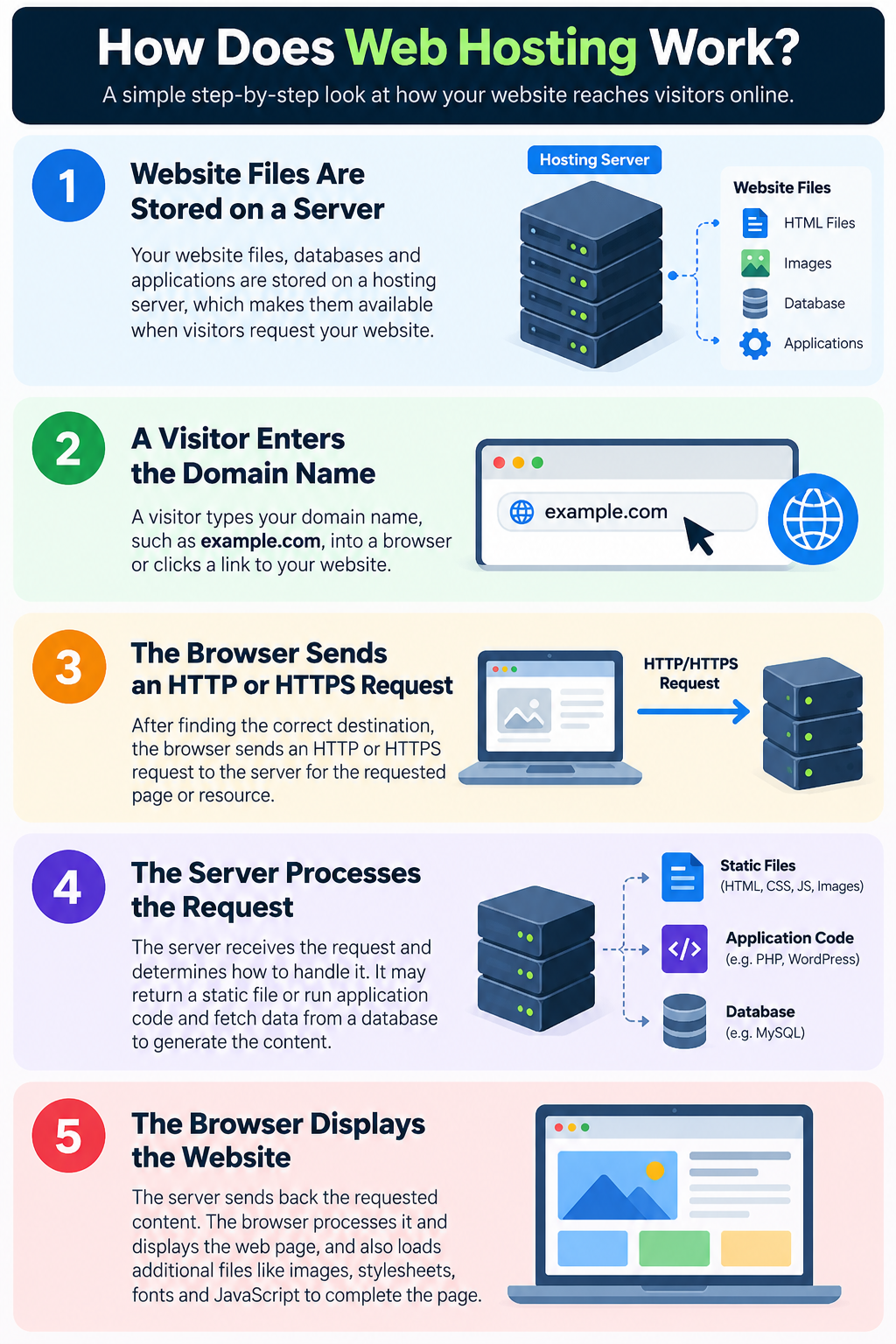
Web hosting works by making website resources available on a server that can receive requests and return the appropriate content. The process generally involves the following steps.
1. Website Files Are Stored on a Server
Website files are uploaded to a hosting server or deployed to a hosting platform. Dynamic websites may also require application software, databases, and other server-side resources to function properly.
The hosting environment makes these resources available when visitors request the website.
2. A Visitor Enters the Domain Name
A visitor types a domain name, such as example.com, into a browser or follows a link to the website.
The Domain Name System (DNS) helps the browser locate the appropriate internet destination associated with the domain. DNS resolution commonly involves obtaining an IP address, although the exact process can vary depending on the DNS records and network configuration.
3. The Browser Sends an HTTP or HTTPS Request
After determining the appropriate destination, the browser connects to the website’s serving infrastructure and sends an HTTP or HTTPS request for a resource.
For example, the browser may request the website’s homepage, an image, or a specific article.
4. The Server Processes the Request
The server or hosting platform determines how to handle the request.
For a static webpage, it may return existing files directly. For a dynamic website, it may execute application code, retrieve information from a database, and generate the requested content.
The exact process depends on the website’s technology and hosting configuration.
5. The Browser Displays the Website
The server returns a response containing the requested resource or an appropriate error message. When the response is successful, the browser processes the returned content and displays the page.
It may also request additional resources, such as images, stylesheets, fonts, and JavaScript files, to complete the page.
This process allows visitors to access website content without needing the original files stored on their own devices.
What Is the Difference Between Web Hosting and a Domain Name?
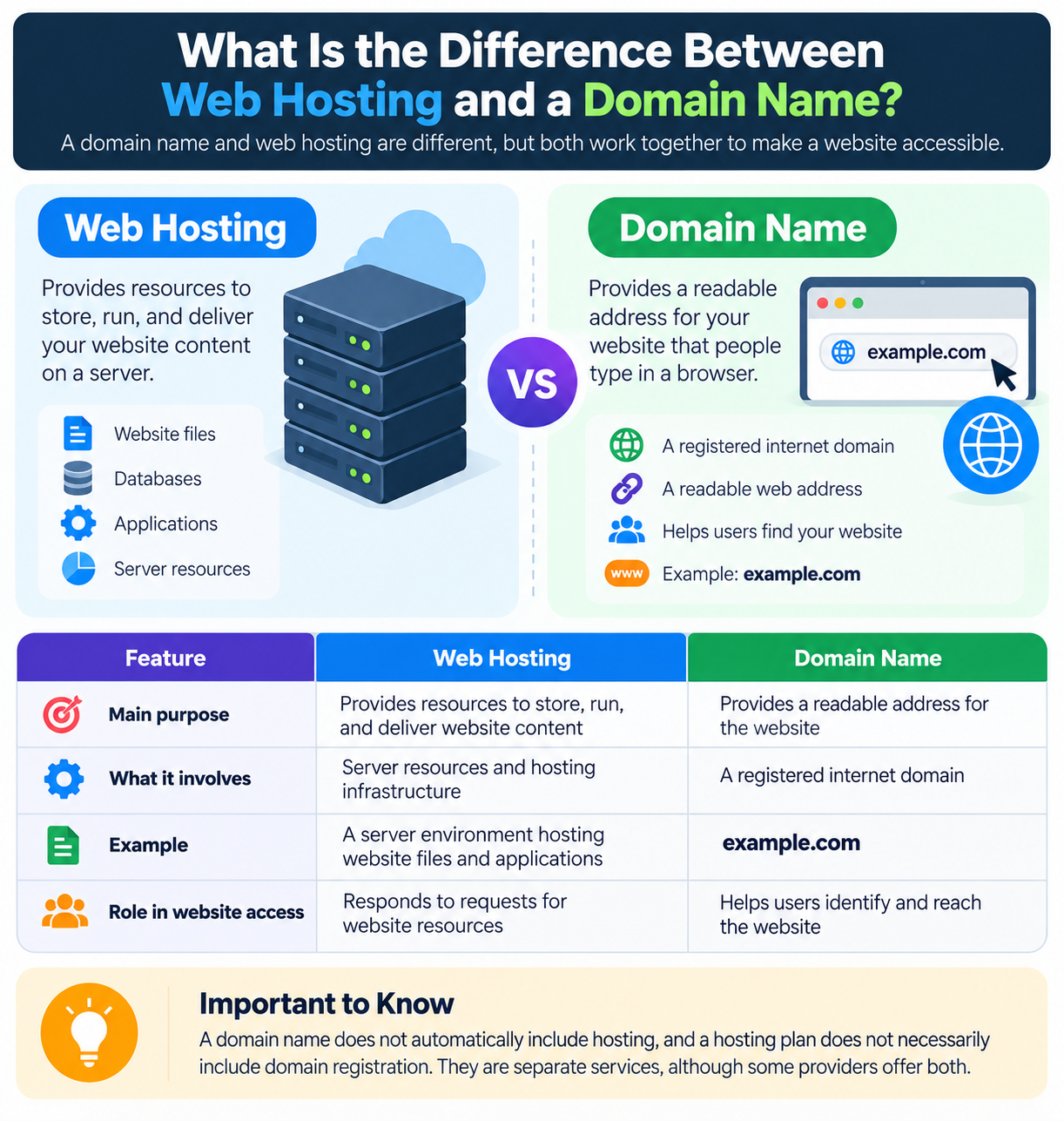
A domain name and web hosting serve different purposes, but they work together to make a website accessible.
| Feature | Web Hosting | Domain Name |
|---|---|---|
| Main purpose | Provides resources to store, run, and deliver website content | Provides a readable address for the website |
| What it involves | Server resources and hosting infrastructure | A registered internet domain |
| Example | A server environment hosting website files and applications | example.com |
| Role in website access | Responds to requests for website resources | Helps users identify and reach the website |
A domain name does not automatically include hosting, and a hosting plan does not necessarily include domain registration. They are separate services, although some providers offer both.
What Does a Web Hosting Server Do?
A web hosting server provides the resources and software needed to deliver website content. Depending on the hosting environment, its responsibilities may include:
Storing website files: Making pages, images, scripts, and other resources available.
Handling requests: Responding when visitors request website pages or files.
Running applications: Executing server-side code for dynamic websites and web applications.
Connecting to databases: Retrieving or updating information when required by the website.
Managing computing resources: Using storage, memory, processing power, and network connectivity to serve requests.
These responsibilities vary according to the website’s technology and the hosting configuration.
Does Every Website Need Paid Web Hosting?
Every publicly accessible website needs an appropriate environment to serve its content, but that does not necessarily mean purchasing a conventional paid hosting plan.
Website owners may use third-party hosting services, managed website platforms, or their own server infrastructure. Some platforms also offer free hosting options with particular limitations.
The appropriate option depends on the website’s requirements, technical complexity, expected traffic, available resources, and maintenance needs.
For most beginners and small businesses, a hosting service can provide a practical way to make a website accessible without managing the entire server environment independently.
Why Is Web Hosting Important for a Website?
Web hosting affects how a website is delivered, maintained, and accessed. Several considerations are particularly important.
Availability: The hosting environment needs to remain accessible so visitors can reach the website.
Performance: Server response times, available resources, application efficiency, and network conditions can influence loading performance.
Security: Website protection depends on factors such as software updates, access controls, configuration, and the security measures provided by the hosting service.
Scalability: Hosting resources may need to increase as website traffic and application requirements grow.
Reliability: Suitable infrastructure, monitoring, backups, and recovery arrangements can help reduce the impact of technical problems.
Hosting is only one part of overall website performance and security. Website code, configuration, third-party services, and network conditions also influence how well a website operates.
Final Thoughts
Web hosting provides the infrastructure needed to make website content accessible online. A domain name gives visitors a readable address, DNS helps direct them to the appropriate destination, and the hosting environment responds to requests by delivering website resources.
Understanding this process provides a useful foundation for learning about website infrastructure and evaluating hosting requirements.
Planning to launch a website? Explore the web hosting resources available through Ranksols.pk to learn more about hosting technologies, website infrastructure, and the factors to consider before choosing a suitable hosting solution.