
Keyword research is an essential part of search engine optimization (SEO) because it helps businesses understand what their target audience searches for and which topics deserve attention. It provides direction for content planning, keyword selection, and website optimization.
Without proper keyword research, businesses may target irrelevant search terms, overlook valuable content opportunities, or create pages that do not match users’ search intent. Understanding why keyword research matters helps website owners make informed SEO decisions and build content around their audience’s actual needs.
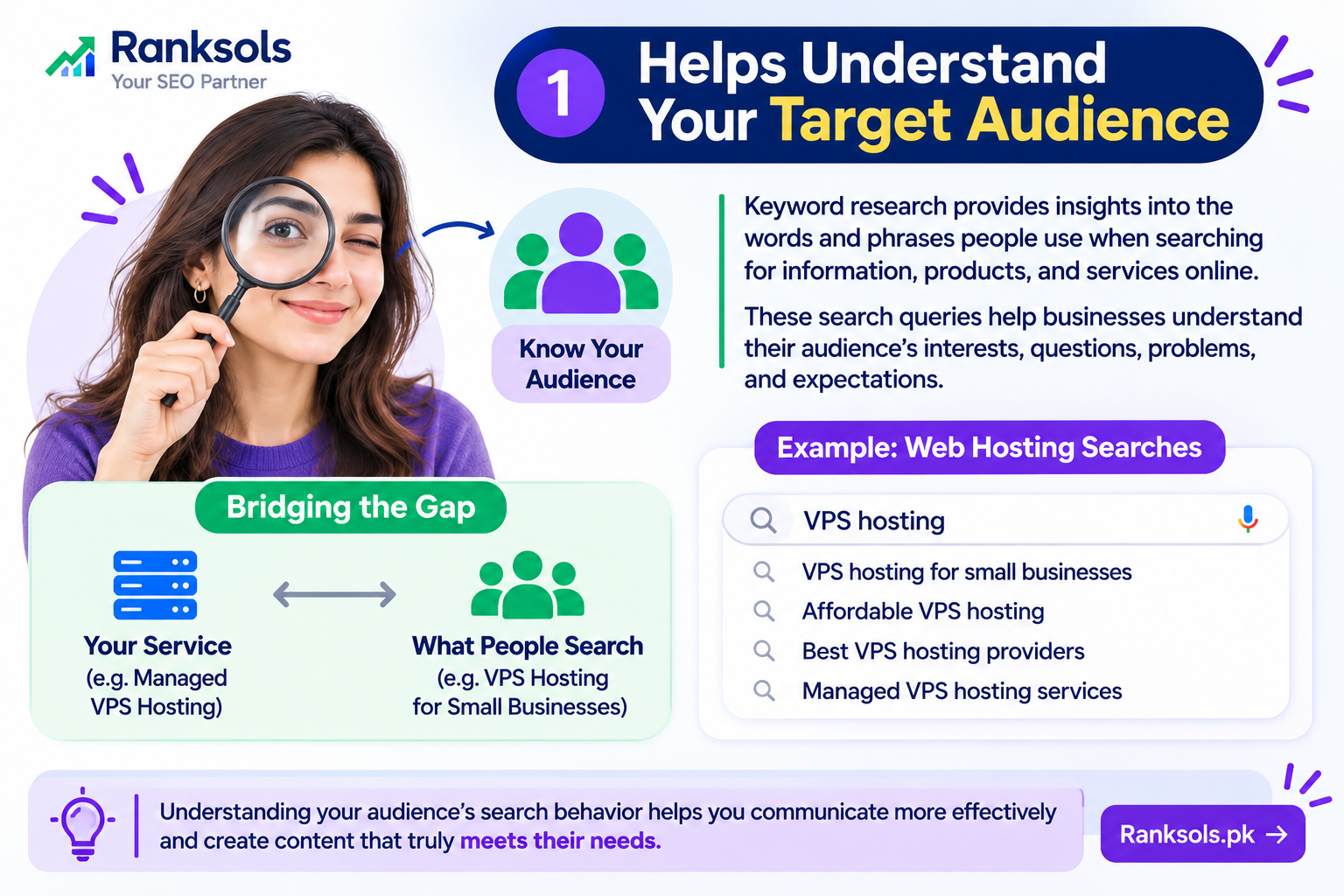
1. Helps Understand Your Target Audience
Keyword research provides insights into the words and phrases people use when searching for information, products, and services online. These search queries help businesses understand their audience’s interests, questions, problems, and expectations.
It also reveals differences between industry terminology and the language customers actually use.
For example, a web hosting company might describe its service as managed VPS hosting, while potential customers may search for:
VPS hosting for small businesses
Affordable VPS hosting
Best VPS hosting providers
Understanding these search patterns helps businesses communicate more effectively with their target audience and create content that addresses genuine user needs.
2. Identifies Relevant Content Opportunities
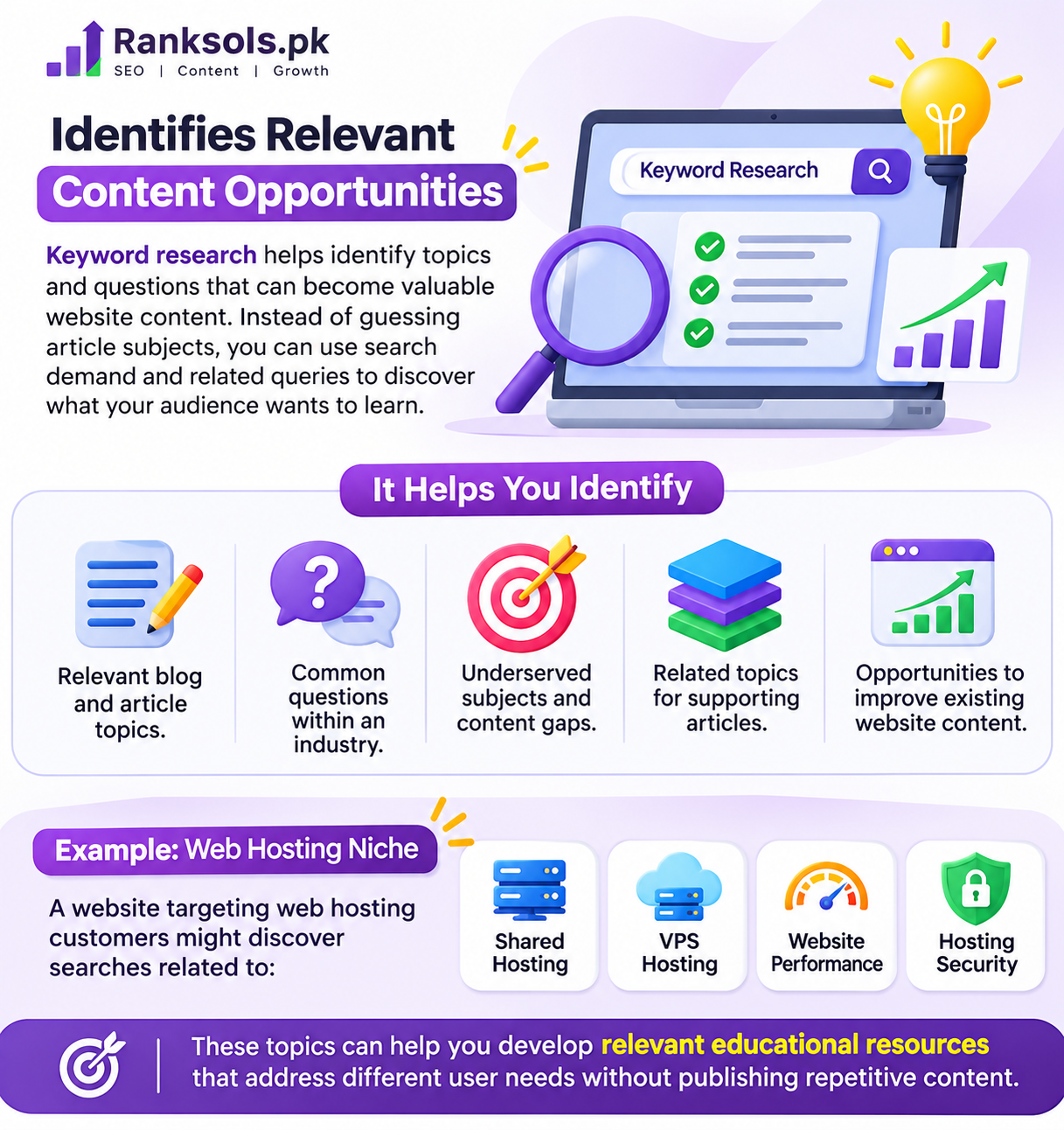
Keyword research helps identify topics and questions that can become valuable website content. Instead of choosing article subjects based on assumptions, businesses can use search demand and related queries to discover what their audience wants to learn.
These insights help identify:
Relevant blog and article topics.
Common questions within an industry.
Underserved subjects and content gaps.
Related topics for supporting articles.
Opportunities to improve existing website content.
For example, a website targeting web hosting customers might discover searches related to shared hosting, VPS hosting, website performance, and hosting security.
These topics can help develop relevant educational resources that address different user needs without publishing repetitive content.
3. Improves Search Intent Alignment
Understanding search intent is an important part of effective keyword research. Search intent refers to the primary purpose behind a user’s search query.
People searching within the same industry may have different objectives. Some want information, while others are comparing solutions or looking to purchase a product or service.
For example:
| Search Query | Likely Search Intent |
|---|---|
| What is SEO? | Informational |
| Best SEO agency in Pakistan | Commercial investigation |
| Ranksols.pk | Navigational |
| Hire an SEO company in Pakistan | Transactional |
Identifying these differences helps businesses select suitable content formats and create pages that meet users’ expectations.
For example, an informational query may require an educational article, while a commercial investigation query may be better served by a comparison or service evaluation page.
Some queries can have overlapping intentions, so reviewing the actual search results can provide additional context.
4. Helps Prioritize Valuable Keywords
Not every relevant keyword deserves the same level of attention. Keyword research helps SEO professionals evaluate search demand, organic competition, relevance, and potential business value before selecting target keywords.
Several factors can help with keyword prioritization:
Search volume: Estimates how frequently people search for a particular keyword within a selected location and period.
Keyword difficulty: A third-party SEO tool’s estimate of how challenging it may be to rank organically for a keyword.
Advertiser competition: Indicates competition among advertisers bidding on a keyword in paid search platforms. It is not the same as organic keyword difficulty.
Business relevance: Measures how closely a keyword relates to a company’s products, services, and business objectives.
For example, a keyword with high search volume may attract broad traffic but have limited relevance to a particular business. A more specific keyword with lower search demand may represent a better opportunity if it aligns closely with the company’s services.
These metrics are estimates and should be evaluated alongside search intent, existing search results, and business objectives. Search volume alone does not determine a keyword’s value.
5. Supports Better Website Content Optimization
Keyword research provides direction for creating and optimizing relevant website content. It helps identify the primary subject of a page and the related terms, questions, and concepts that should be addressed.
These insights can guide improvements to:
Page titles and main headings.
Content structure and subheadings.
Product and service descriptions.
Relevant supporting information.
Internal link anchor text.
Image alt text when appropriate.
For example, when creating an article about website hosting, keyword research may reveal related topics such as hosting performance, server resources, website security, and hosting plans.
Covering relevant concepts naturally helps make the content more useful and complete.
However, keywords should not be inserted artificially into every heading or paragraph. The priority should be clear, relevant, and helpful information rather than repeated exact-match phrases.
6. Reveals Long-Tail Keyword Opportunities
Long-tail keywords are specific search phrases that often communicate a clearer user need than broad search terms.
For example:
Broad keyword: Web hosting
More specific keyword: Best web hosting for small business websites
The more specific query provides additional context about what the user wants.
Researching long-tail keywords can help businesses discover opportunities to address particular questions, requirements, and problems.
Although these keywords may have lower individual search volumes, they can attract relevant visitors when the content closely matches the search intent.
However, lower competition and higher conversion rates are not guaranteed. Their actual value depends on the search results, audience, and business context.
7. Helps Prevent Content Overlap and Keyword Cannibalization
Keyword research supports better website content organization by helping businesses determine which search queries should be addressed on existing pages and which deserve separate content.
Publishing multiple pages about closely related subjects without a clear difference in purpose can create unnecessary content overlap.
For example, a website may have several articles targeting similar web hosting queries. If those articles provide substantially the same information and satisfy the same search intent, maintaining separate pages may not provide additional value.
Keyword research helps identify:
Existing pages targeting similar search queries.
Related keywords that can be covered on one page.
Topics that deserve separate articles.
Opportunities to improve existing content instead of creating duplicates.
It is important to understand that targeting related keywords across multiple pages does not automatically create keyword cannibalization. The main concern is whether the pages compete to satisfy substantially the same search intent.
A clear content structure and relevant internal links can help establish the purpose and relationship of individual pages.
8. Supports a Long-Term SEO Strategy
Keyword research helps businesses organize their SEO activities around relevant topics and audience needs.
Instead of publishing isolated articles, businesses can use keyword insights to develop a structured content strategy in which related pages support broader subject areas.
This includes identifying:
Primary topics and supporting keywords.
Related subjects for content clusters.
Content gaps and publishing priorities.
Opportunities for internal linking.
Areas where existing content needs improvement.
For example, a website offering SEO services may organize its knowledge resources around keyword research, search intent, on-page SEO, technical SEO, and organic traffic.
Each subject can have dedicated supporting articles that explain specific concepts and link to relevant resources.
This approach helps create a more organized website and provides readers with useful pathways to explore related information.
Final Thoughts
Keyword research matters for SEO because it connects website content with actual user searches and business objectives. It helps businesses understand their audiences, discover relevant content opportunities, align pages with search intent, and prioritize keywords based on their potential value.
However, keyword research alone does not guarantee higher rankings or organic traffic. Its real value comes from using search insights to create helpful content, organize website pages, and address users’ needs effectively.
At Ranksols, we recognize the importance of strategic keyword planning in building a strong SEO foundation. Our SEO approach focuses on understanding search intent, identifying relevant opportunities, and developing content strategies aligned with business objectives.
By making keyword research part of a broader SEO strategy, businesses can make more informed content decisions and work toward sustainable organic search growth.